


Key Insights / TL;DR
Summary: Dry, brittle hair is often caused by a lack of moisture, which can result from environmental factors, heat styling, and chemical processing. Addressing it involves using hydrating hair care products and adopting a gentle hair care routine.
Key Takeaways:
- Hair that exhibits a rough texture and snaps easily is a classic sign of dryness and brittleness.
- Using moisturizing shampoos and conditioners can help support softness and manageability.
- Limiting heat styling and protecting hair from environmental stressors help prevent further damage.
Dry, brittle hair often looks dull, exhibits a rough texture, and breaks easily because it lacks moisture and its protective outer cuticle is compromised. Daily habits, styling choices, and environmental exposure can all contribute, leaving strands more fragile and prone to hair breakage and split ends.
Understanding what is making your hair appear dry and fragile can help you choose a better approach. A gentle damaged hair routine paired with products formulated for dry hair can visibly improve the appearance and texture of your hair over time.
Here’s what to know about the causes of dry, brittle hair and how you can adjust your routine to address it.
What Causes Dry, Brittle Hair?
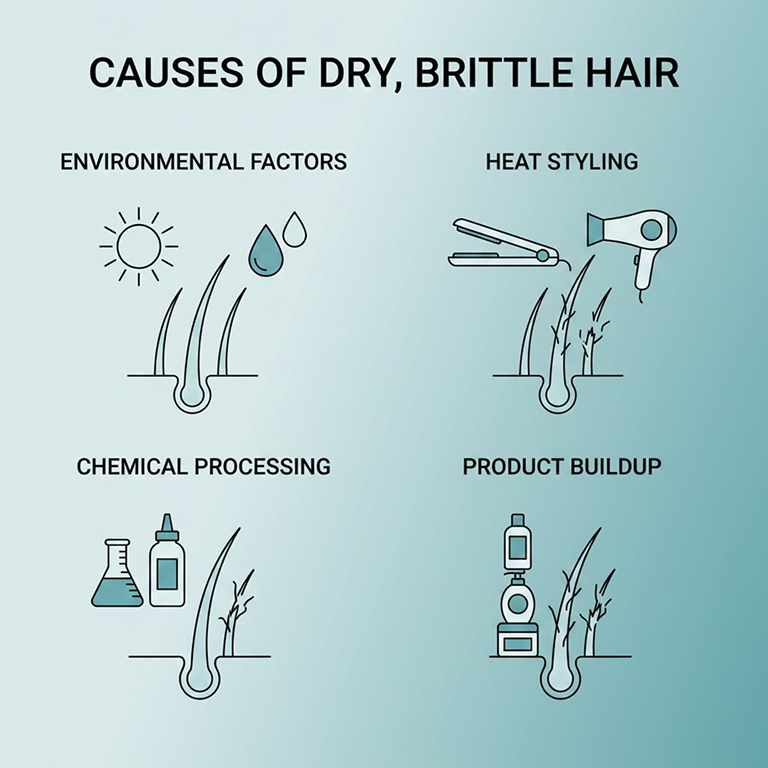
Several factors can strip away your hair’s natural moisture and contribute to dryness and brittleness. Environmental stressors, chemical processing, and everyday styling habits can gradually weaken the hair shaft’s protective cuticle, contributing to a rougher texture and increased vulnerability to breakage.
Environmental and Lifestyle Factors
Sun, wind, dry air, chlorinated pools, and salt water can all contribute to moisture loss and result in hair with a rough or brittle texture. Repeated swelling and drying may also stress strands, especially if you’re aggressive when detangling, towel-drying, or go to bed with wet hair, as wet hair is more vulnerable to friction and stretching.
Common Causes Include:
- Over-Washing: Strips natural sebum and oils from your scalp and hair.
- Heat Styling: Frequent blow dryers, flat irons, or curling tools—especially without a heat protectant—can damage the hair cuticle.
- Chemical Treatments: Coloring, perming, or relaxing alter hair structure, leading to increased dryness.
- Environmental Exposure: Sun, wind, and low humidity climates increase moisture loss.
Match Your Dry-Hair Symptoms to a Routine Adjustment
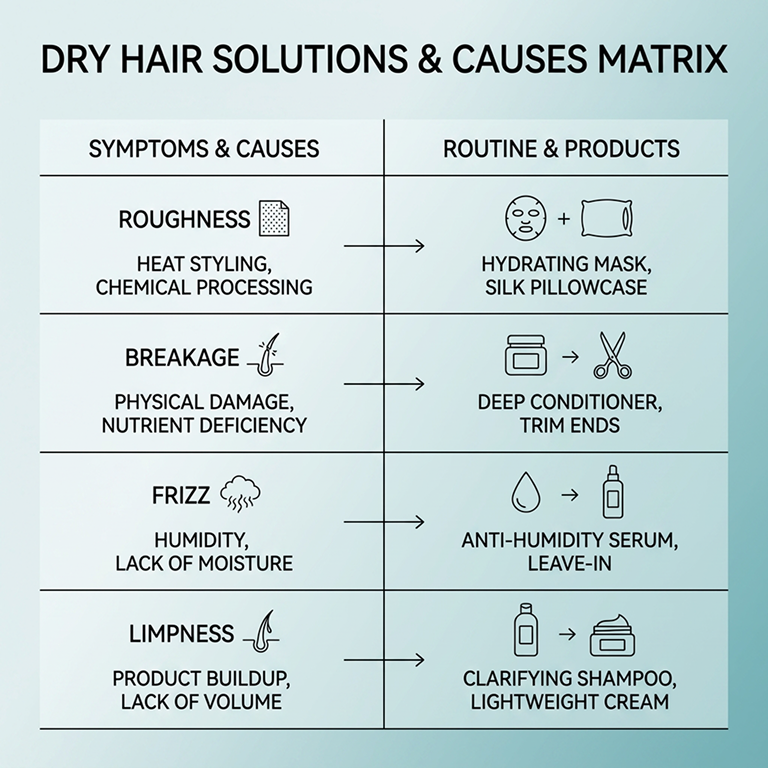
If your hair is prone to snapping or feels rough to the touch, incorporating regular treatments like applying a hydrating hair mask regularly can significantly improve softness and manageability, particularly when paired with tailored conditioning and protective steps.
Use your hair’s most noticeable symptoms as a starting point. Use this decision matrix to match each symptom with practical routine tweaks and the right type of products for dry hair.
| If Your Hair... | What Your Routine May Need | Possible Routine Adjustment |
|---|---|---|
| Has a rough or straw-like texture | More consistent conditioning support | Switch to a moisturizing shampoo for dry hair, use lukewarm water, condition mid-lengths & ends. |
| Snaps easily or has visible split ends | Protection from additional breakage and support for damaged lengths | Reduce heat styling, apply a heat protectant, try a weekly deep conditioning for brittle hair, trim regularly. |
| Appears frizzy or is difficult to manage | Added moisture, slip, and smoothing support | Use rinse-out conditioner, add a leave-in or lightweight hair oil. |
| Appears weighed down after moisturizing | A lighter-weight routine with more targeted application | Use lightweight formulas, focus on mid-lengths & ends. |
| Has a stiff or unusually brittle texture after protein application | Simpler moisture-focused routine | Avoid protein overload, focus on basic hydration. |
| Appears limp/overly soft, or stretches before breaking | More balanced strengthening | Use balanced formulas to strengthen hair, avoid excess moisture layering. |
Could Hard Water or Product Buildup Be Contributing?
Minerals like calcium, magnesium, and iron in hard water can leave a film, making hair dull, stiff, or tangled. Product buildup creates similar signs. Look for clues like lingering residue after washing or dryness that improves post-clarifying. Adjust your cleansing frequency based on your hair needs, not a set schedule.
Is the Dryness Coming from Your Hair or Scalp?
Dry hair: Affects lengths and ends, resulting in strands that look and have a rough texture.
Dry scalp: May exhibit a tight sensation, with small dry flakes. Greasy flakes, redness, or significant itching point to a different scalp concern—consult a dermatologist if these occur. Pro tip: Not every sign of hair fall is due to dryness. Broken, short, or split pieces signal breakage; a full-length strand with a bulb means shedding from the scalp.Is It Breakage or Shedding?
Short, frayed, or split pieces usually point to mid-length breakage caused by external damage. A full-length strand with a small bulb at the root indicates natural shedding from the scalp. Dryness increases the risk of breakage but doesn’t cause true hair loss. See a dermatologist if you notice sudden shedding, bald patches, or scalp irritation.
How to Build a Hair Care Routine for Dry Hair
Once you determine what’s causing the dryness, focus on three routine priorities: gently cleanse, condition where it’s needed, and protect strands from heat, friction, and environmental exposure. Adjust each step according to your hair’s thickness, porosity, and overall health.
Build Around Cleansing, Conditioning, and Protection
Build your routine on three pillars—cleansing, conditioning, and protection. Choose moisturizing shampoos and conditioners that suit your hair type and dryness level. Consistency is essential, but you can tailor frequency, application area, and level of protection based on your lifestyle and styling habits.
- Cleanse mainly at the scalp to remove oil and buildup.
- Apply conditioner and masks through mid-lengths and ends.
- Avoid high heat, rough towel-drying, and tight hair styles to minimize hair breakage.
Adjust the Routine to Your Hair’s Needs
Fine or easily weighed-down hair often benefits from fewer, lighter steps. For coarse, curly, or high-porosity hair, emphasize intensive conditioning and moisture retention. If your hair is color-treated or heat-styled, prioritize protection and monitor results as you introduce new products.
Products Formulated for Dry, Brittle Hair
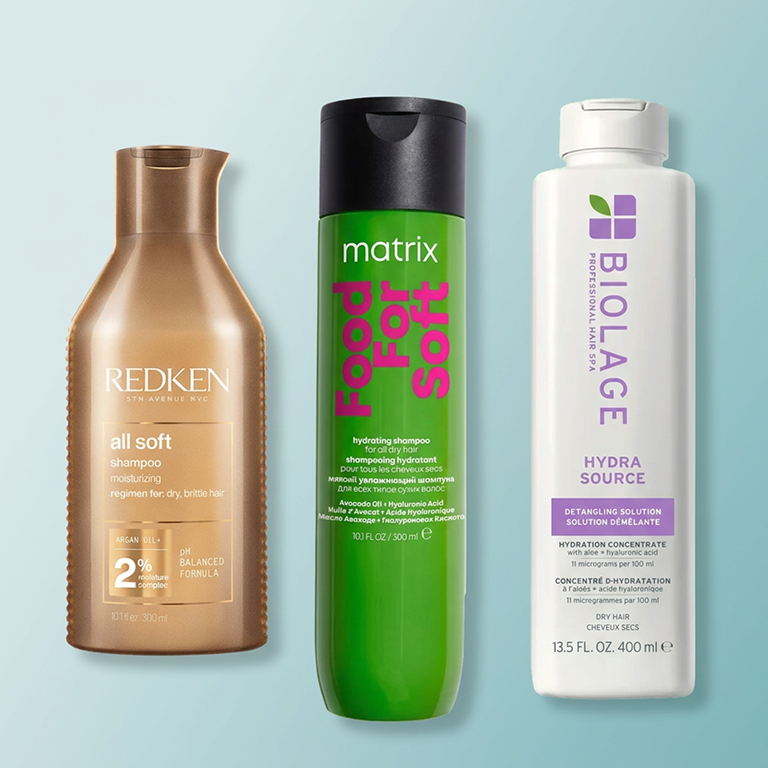
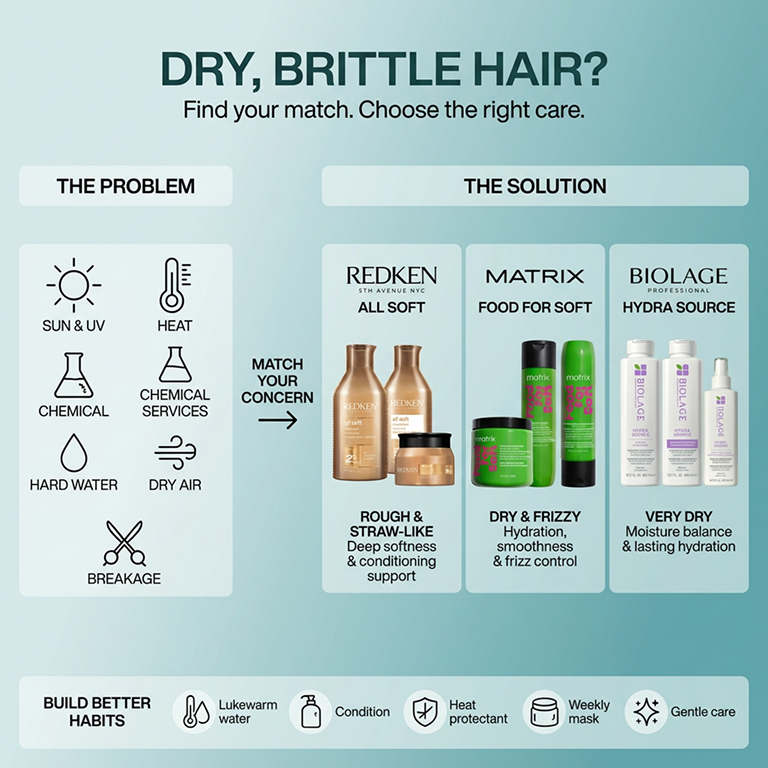
The right products for dry hair can transform your routine. These professional systems from L'Oréal brands are specially formulated to hydrate, smooth, and protect dry, brittle hair:
Soften Dry, Brittle Hair With Redken All Soft Shampoo, Conditioner, and Heavy Cream Mask
Best for: Hair that has a rough, brittle, or straw-like texture. Formulated with argan oil and helps hair appear softer and shinier. Redken’s professional formulas can also play a role in repairing damaged hair bonds—helping to fortify your strands and enhance overall texture with continued use
- Shampoo: Cleanses gently and helps support softness.
- Conditioner: Apply and leave on for 1–2 minutes.
- Heavy Cream Mask: Deep conditioning for brittle hair, use weekly for 5–15 minutes.
Hydrate and Smooth Dry Hair With Matrix Food For Soft Hydrating Shampoo, Treatment Mask, and Hair Oil Serum
Best for: All hair types needing lightweight moisture, frizz control, and smoothing. Formulated with avocado oil and hyaluronic acid.
- Shampoo: Gently cleanses and helps support hydration.
- Mask: Apply after shampoo, leave for 3–5 minutes.
- Hair Oil Serum: Use on wet/dry hair to help enhance shine.
Support Moisture Balance With Biolage Hydra Source Shampoo, Conditioning Balm, and Daily Leave-In Tonic
Best for: Very dry hair needing deep, ongoing hydration. Inspired by the resilient aloe plant.
- Shampoo: Helps provide hydration without excess weight.
- Conditioning Balm: Helps support moisture mid-lengths to ends, leave for up to 3 minutes.
- Daily Leave-In Tonic: Spray onto damp hair for ongoing hydration.
| Product System | Ideal Match For |
|---|---|
| Redken All Soft | Rough, brittle, straw-like hair; lacks softness |
| Matrix Food For Soft | Hair that needs lightweight hydration, smoothing, and frizz management |
| Biolage Hydra Source | Very dry hair needing ongoing moisture balance |
Dry, Brittle Hair Questions Answered
Still have questions about your hair’s dryness or the right care strategy? Here are expert-backed answers.
Can diet affect brittle hair?
Hair health is partly genetic, but a diet rich in protein, biotin, and iron is fundamental for growing strong, healthy hair. Nutrient deficiencies over time can show up as dryness, thinning, or brittleness.
Can seasonal weather make hair feel drier?
Absolutely. Cold air, indoor heating, sun, wind, and regular swimming can all accelerate moisture loss. Adjusting your routine as seasons change—by adding richer conditioners in winter or sun protectant in summer—keeps hair resilient.
Does brittle hair mean it's unhealthy?
Brittleness signals moisture loss or cuticle damage, but with the right routine—like regular deep conditioning and gentle styling—you can help support softness and enhance hair’s overall appearance.
s hard water bad for dry hair?
Yes. Hard water minerals build up, making hair coated and stiff. An occasional clarifying shampoo can help, but always follow with a conditioner to keep fragile strands supple.
Is air-drying a good choice for brittle hair?
Air-drying is gentler than heat styling; if you must use heat, always apply a heat protectant and use the lowest setting possible.
Can sleeping on wet hair contribute to breakage?
Yes. Wet strands are more prone to stretching and friction. Dry hair before bed when possible, and if you must sleep with damp hair, use a microfiber towel and a protective, loose style.


