


TL;DR: Frizz-fighting hair oils work well when your hair type, porosity, and the kind of frizz you’re trying to control are thoughtfully considered. Lightweight oils and serum-oil hybrids are commonly used for flyaways and shine, while richer formulas may better suit rough, dry, or high-porosity hair.
Frizzy hair is less than ideal, unfortunately all too relatable, and on some days, feels impossible to tame. The good news? If your hair gets puffy, is rough, static-prone, or flyaway-heavy, the right oil or oil-based formula can help improve softness and make frizz look less noticeable.
Here’s the thing though: Frizz isn’t one-size-fits-all. It can stem from a long list of causes—humidity, surface damage, porosity, dryness, friction, and even just running your hands through your hair too much. That’s why finding your frizz-fighting MVP is all about knowing your hair type, understanding what’s causing the chaos, and choosing an oil (or oil hybrid) that brings balance, slip, and shine—without weighing your strands down.
The guide ahead will help you decode what to look for in a hair oil, how to use it for maximum smoothness, and highlight expert product picks. Here’s to finding your frizz fix—and getting you on the road to your sleekest hair yet.
Key Takeaways:
- Oils do not hydrate hair directly; they are typically used to help reduce moisture loss, improve softness, and add shine.
- Ingredients such as argan oil, squalene, camellia oil, and dimethicone-based blends are commonly used to smooth the hair surface, but performance depends on the full formula and how the product is applied.
- Humidity resistance exists on a spectrum and is influenced by formula design, hair condition, environment, and styling routine.
- When choosing a hair oil, start with hair type, then refine by porosity and frizz pattern: finer or low-porosity hair often does better with lighter formulas, while drier, coarser, curlier, or high-porosity hair may tolerate richer ones.
What to Look for in a Hair Oil for Frizzy Hair
When it comes to taming frizz, an effective oil should add slip, boost softness, and smooth your hair’s surface—without feeling heavy or greasy. Not sure where to start? Begin by thinking about your hair type, then factor in your hair’s porosity and the kind of frizz you’re dealing with most.
Generally, lightweight oils and serum-oil hybrids are best for tackling flyaways, crown fuzz, and smoothing down low-porosity or finer hair. If your frizz comes from rough ends, dryness, or you have high-porosity hair, you might prefer a richer formula for a major moisture boost.
Check out the chart below for a cheat sheet on which ingredients work well for different frizz concerns and hair textures.
| Ingredient | What It Does | Ideal For | Limitations / Formula Notes |
|---|---|---|---|
| Argan Oil | Commonly used to improve softness, smooth the look of rough lengths, and add shine. | Medium-frizz smoothing, dull lengths, and formulas that need slip without feeling overly heavy. | Its feel depends on the blend; in lighter formulas it can suit finer hair, while richer formulas may feel too heavy for hair that gets greasy quickly. |
| Squalene | A lightweight emollient known for high spreadability, a silky feel, and relatively low residue on the hair surface. | Fine, straight, low-density, or easily weighed-down hair that needs light smoothing. | On its own, it may not feel rich enough for very rough, highly porous, or dryness-driven frizz unless the full formula includes additional conditioning support. |
| Camellia Oil | Often associated with softness, shine, and a silky surface finish in finishing oils. | Those looking for shine, polished ends, and everyday smoothing rather than a very rich treatment feel. | It is usually part of a broader blend, so humidity resistance and frizz control still depend on the total formula. |
| Dimethicone and Silicone Blends | Common in anti-frizz serums and oil-serum hybrids because they can form a light surface film that helps reduce tangling, flyaways, and some visible effects of humidity. | Humidity-prone frizz, polished finishes, and formulas meant to feel smooth and controlled. | These effects are temporary and formulation-dependent rather than absolute. They do not permanently seal hair or fully block humidity in every environment. |
| Coconut Oil | Often used when hair feels very dry or rough because it can improve softness and help reduce moisture loss; under certain conditions, it has also been shown to penetrate the hair fiber more readily than some other oils. | Coarse, very dry, damaged, or high-porosity hair, especially in pre-wash or richer treatment formats. | It can feel too rich for fine, straight, or low-porosity hair and may not be the best pick for quick finishing on hair that gets limp easily. |
| Jojoba Oil | Often described as a lightweight conditioning oil with a feel similar to skin and scalp lipids, which can help reduce a greasy-looking finish in some formulas. | Light to medium conditioning, scalp-and-length crossover products, and readers who want softness without a very rich coating. | It may not provide enough visible smoothing on its own for strong humidity frizz unless paired with other film-formers or conditioning agents. |
| Marula Oil | A fast-spreading oil often used to improve softness, shine, and a lighter-conditioning feel. | Lightweight finishing oils, smoother-looking ends, and readers who want hydration-adjacent softness without a heavy finish. | Like other oils, it helps condition the surface rather than add water to the hair, and overall performance depends on the finished product. |
Hair Oil for Fine, Thin, or Low-Porosity Hair
Fine or thin hair can easily get weighed down or look greasy with the wrong product, so lightweight oils (or oil-serum hybrids) are a suitable bet—especially if you also have low-porosity hair. If your main struggles are flyaways, crown fuzz, or humidity-induced surface frizz (rather than super-rough ends), reach for ultra-light formulas that spread easily and won’t leave buildup behind. Look for products designed to boost shine, softness, and provide light humidity control—skip anything too heavy or nourishing, since those can flatten your strands.
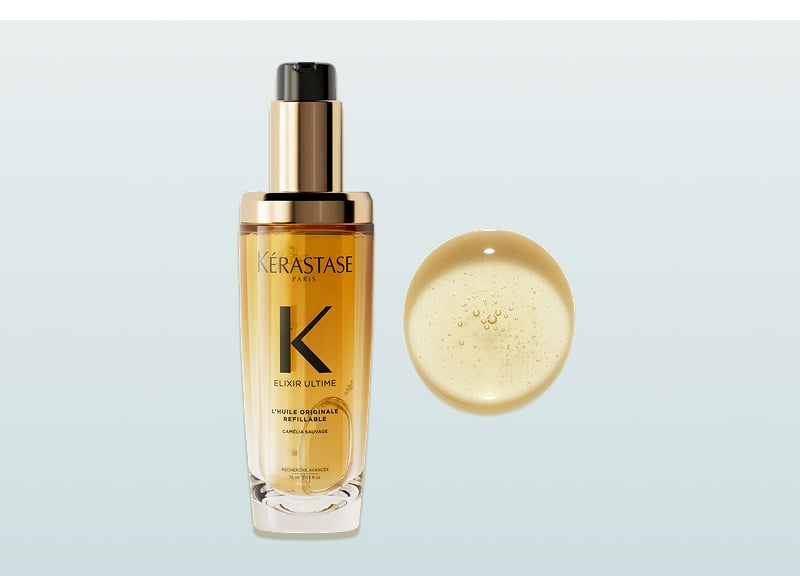
Kérastase Elixir Ultime Hydrating Hair Oil
Kérastase Elixir Ultime Hydrating Hair Oil is a luxurious, multi-benefit oil formulated to provide high-shine, strength, and silky softness to hair—all without weighing it down. Used as a prep, treat, or finishing step, this versatile oil helps change the appearance of dull, dry strands, leaving them looking smooth and luminous.
Key Ingredients:
- Camellia Oil: deeply nourishes, smooths, and adds shine
- Marula Oil: rich in antioxidants and fatty acids for hydration and softness
- Argan Oil: strengthens and protects against everyday damage
Ideal For:
- Dull, dry, or lackluster hair
- All hair types seeking smoothness, shine, and lightweight hydration
- Taming frizz and flyaways without leaving greasy residue
Hair Oil for Thick, Coarse, Curly, or High-Porosity Hair
If your hair is thick, coarse, curly, or high porosity, you can typically handle (and benefit from) richer, more nourishing hair oils. These types of oils and oil-serum blends help lock in moisture and smooth the hair’s surface—perfect for battling dryness-driven frizz, rough ends, or major expansion in humidity (rather than just flyaways).
Porosity matters here, too though: high-porosity hair often loves heavier oils for help sealing in hydration, while low-porosity types may still prefer something a bit lighter. And don’t forget other factors, like your local climate, how often you heat style, and whether your hair’s been chemically treated—all of which can impact how much moisture your strands truly need.
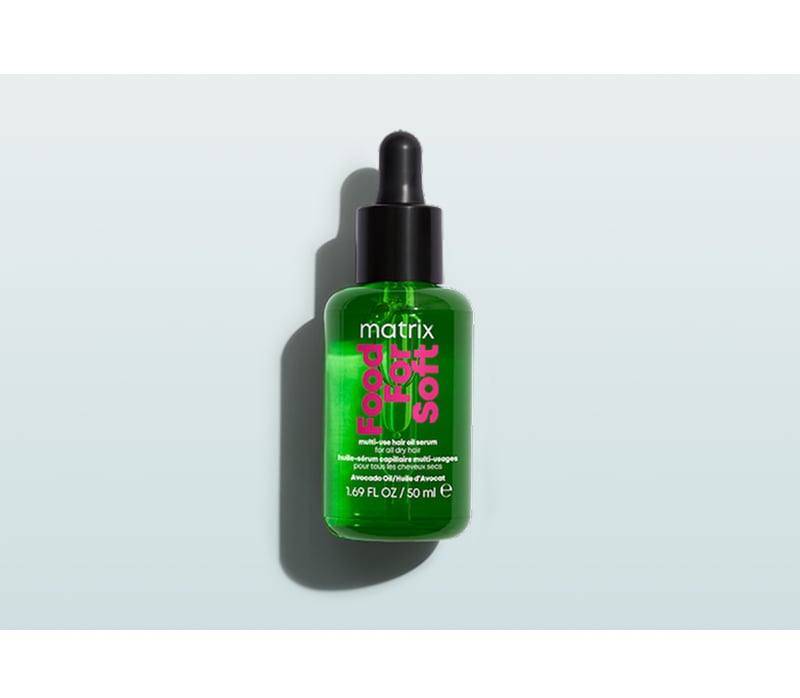
Matrix Food For Soft Multi-Use Hair Oil Serum
Matrix Food For Soft Multi-Use Hair Oil Serum is your shortcut to soft, touchable strands. The versatile formula is packed with plant-based nourishment that provides weightless (buildable) hydration, frizz control, and a smooth texture. It also can be used on either damp or dry hair to instantly revitalize dull, rough strands, making it a go-to for effortless manageability.
Key Ingredients:
- Avocado Oil: Deeply hydrates and nourishes for lasting softness
- Hyaluronic Acid: Attracts and locks in moisture
- Sunflower Seed Oil: Boosts shine and helps control frizz
Ideal For:
- Dry, rough, or frizz-prone hair
- All hair types looking for added softness without heaviness
- Use as a leave-in, pre-blow dry, or finishing touch for smooth, shiny results
Hair Oil for Curly and Wavy Hair
Curly and wavy hair naturally craves moisture—and the right hair oil can make all the difference. Because these textures often deal with dryness, frizz, and definition loss, a nourishing yet lightweight oil helps keep curls bouncy, hydrated, and frizz-free. Look for formulas that enhance softness, add shine without weighing down your pattern, and lock in moisture after styling.
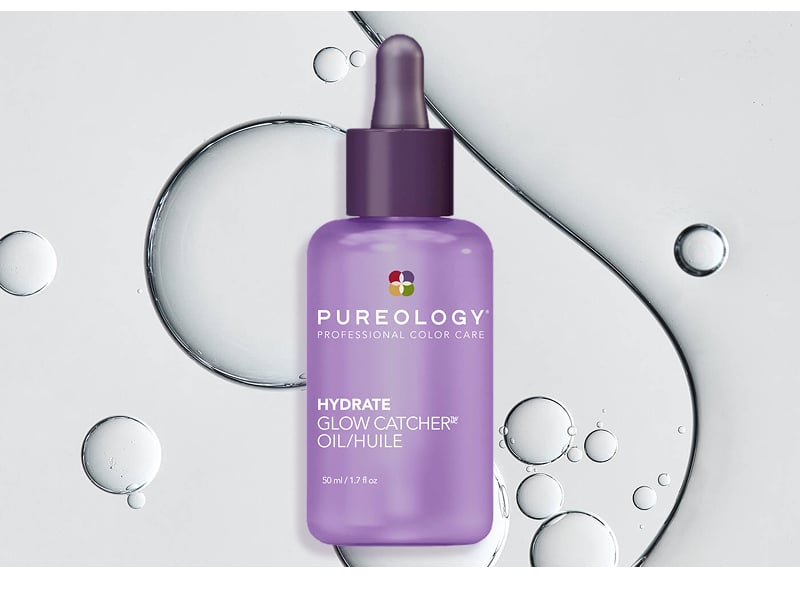
Pureology Hydrate Glow Catcher Hydrating Hair Oil
Pureology Hydrate Glow Catcher Hydrating Hair Oil is a shine-boosting, hydrating oil formulated to address dry strands and provide a glass-like luster—without heaviness or buildup. This lightweight, silicone-free formula instantly softens and smooths while protecting color and improving manageability—specifically for curls.
Key Ingredients:
- Vitamin E: Antioxidant protection and smoothness
- Vitamin B5: Helps attract and retain moisture for soft, hydrated hair and reduced frizz
- Camellia Seed Oil: Nourishes strands and enhances shine without heaviness
Ideal For:
- Dry-to-very-dry, dull, or color-treated hair
- All curl patterns
- Anyone who wants smooth, glossy, hydrated hair without residue
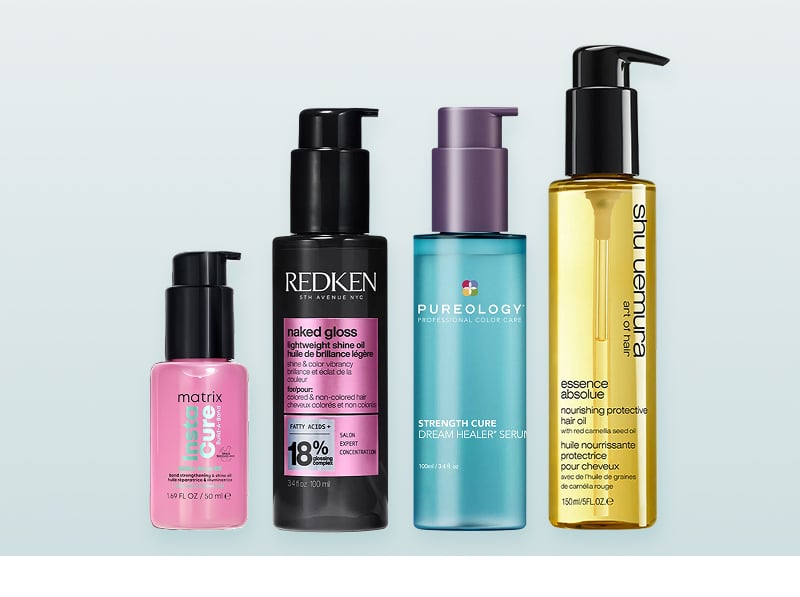
More Notable Hair Oils for Frizzy Hair
Pureology Strength Cure Dream Healer Serum
Pureology Strength Cure Dream Healer Serum is a multitasking leave-in formulated to provide strength, softness, and protection to dry hair. Featuring a lightweight texture, this powerful serum helps improve the appearance of split ends and fortifies brittle strands while shielding hair from heat and environmental stress.
Key Ingredients:
- Lactic Acid: Naturally derived to soften hair and improve moisture retention
- Amino Acids: Known to retain moisture within the fiber, helping to prevent breakage
- Citric Acid: Penetrates the fiber to reinforce inner strength and repair damaged hair
Ideal For:
- Damaged, brittle, or color-treated hair
- Split ends and breakage-prone hair
- Anyone looking for added heat protection and easy detangling in one, non-greasy step
Redken Naked Gloss Lightweight Shine Oil
Redken Naked Gloss Lightweight Shine Oil is a quick fix for instantly glossy, touchably soft hair. The ultra-lightweight formulation delivers mirror-like shine and silky smoothness without weighing strands down or leaving a greasy residue. Use it on damp or dry hair to tame frizz, boost radiance, and enhance color.
Key Ingredients:
- Dimethiconol: Helps detangle and provide long-lasting shine and frizz control
- Apricot Kernel Oil: Nutrient-rich botanical oil for deeply moisturizing dry strands, taming frizz, and soothing the scalp
Ideal For:
- All hair types seeking weightless shine and smoothness
- Fine or flat hair in need of light hydration and high-gloss finish
- Taming flyaways and polishing styled hair without sacrificing volume
Shu Uemura essence Absolue Nourishing Protective Hair Oil
Shu Uemura essence Absolue Nourishing Protective Hair Oil is a luxurious, cult-favorite formula designed to provide next-level nourishment, shine, and softness to all hair types. Infused with camellia oil, this multi-tasking elixir helps protect against dryness, UV damage, and frizz while instantly smoothing and enhancing manageability.
Key Ingredients:
- Camellia Oil: deeply moisturizes, softens, and imparts weightless shine
- UV Filters: protect hair from environmental aggressors and color fading
Ideal For:
- Dry, frizzy, or unruly hair in need of intensive nourishment
- All hair types seeking a silky finish and long-lasting, radiant shine
- Multi-use daily protection from UV rays, heat styling, or urban pollution
Matrix Billion Bond Oil is a lightweight bonding oil designed to strengthen hair and help improve the appearance of damage while delivering intense shine and frizz control. Powered by advanced bonding technology, this multitasking oil reinforces damaged bonds within the hair fiber, softens rough ends, and protects against heat.
Key Ingredients:
- Glycerin: deeply hydrates and reduces frizz
- Bonding Complex: helps reinforce inner hair structure and repair damage
Ideal For:
- Damaged, over-processed, or color-treated hair
- Hair prone to breakage, split ends, or dryness
- Anyone seeking bond repair, heat protection, and glossy, frizz-free finish without heaviness
How to Match a Hair Oil to Your Frizz Type
| Frizz Type | What It Suggests | Oil Type |
|---|---|---|
| Flyaways and crown fuzz | Usually points to a need for surface smoothing without much weight. | Lightweight oil or oil-serum hybrid. |
| Humidity makes hair expand fast | Often suggests a need for stronger smoothing support and partial humidity resistance. | Smoothing oil or serum-oil formula, sometimes with dimethicone, argan oil, or other film-formers. |
| Ends feel rough, dry, or dull | Often points to a need for more slip, conditioning, and softness through the lengths. | Medium to richer oil that reduces moisture loss and helps mend damage—especially for dry or high-porosity hair. Consider a bond oil. |
| Hair looks greasy easily | Suggests a need for less product, lighter texture, and more targeted placement. | Ultra-light oil, used sparingly (start with just one drop) and only apply from mid-lengths to ends—avoid the roots. |
How to Use Hair Oil in Your Routine to Tame Frizz
If hair oil hasn’t worked magic for you in the past, the culprit might be how you’re using it. Applying too much, working it in too close to your roots, or choosing a formula that’s too rich for your hair type can leave strands looking greasy instead of smooth. What’s key is determining (admittedly, sometimes through trial and error) the right amount, the right placement, and a formula to use that matches your texture. Get those right, and hair oil can be your ultimate frizz-taming tool.
How to Use Hair Oil in Your Routine to Tame Frizz
- Start small: Begin with one drop, one pump, or a few drops of oil in the palm of your hand.
- Warm it up: Rub your palms together to thin the formula slightly and encourage more even distribution.
- Adjust for hair type: Fine or low-density hair may only need one drop, while thicker, longer, or curlier hair may need 2-3 drops or pumps.
- Build gradually: It’s easier to add more hair oil than to correct an overly slick or greasy finish.
Apply to Mid-Lengths and Ends
Focus the application on the parts of your hair that need it most. The mid-lengths and ends are usually the driest, roughest, and most prone to visible frizz. Roots, on the other hand, are most likely to look greasy if too much product is applied there.
For damp-hair application, smooth the oil through freshly washed hair before blow-drying, diffusing, or air-drying, so the formula can coat strands evenly as the style sets. For dry-hair application, use an even smaller amount and concentrate only on flyaways, rough ends, and the outer layer of the hair.
Dos and Don’ts Layering Scalp Oil and Frizz Oil in One Routine
Do: Use scalp-focused oils the way the formula is intended, which is often before shampooing or as a targeted scalp treatment. Use frizz-focused oils after washing or during styling when the goal is smoother-looking lengths and reduced flyaways.
Do: Remember that each hair oil serves a unique purpose and is meant for a specific step in your routine—and often, a different spot on your hair.
Don’t: Assume every oil can be applied root to tip in the same way. A heavy scalp treatment may leave the lengths coated, while a lightweight finishing oil may not give the scalp the type of conditioning support a reader expects.
Don't: Apply scalp oil root-to-tip expecting frizz-control results—these formulas are not designed for the strand and may contribute to buildup.
Don’t: Apply frizz oil to the scalp—most frizz oils are too lightweight to offer meaningful scalp moisture and may create a greasy root appearance.
Keep in mind: If you only have one concern—scalp dryness only, or frizz only—there is no need to use both types of oil. Match the product to the concern!
What’s the difference between a hair oil for frizz and an anti-frizz serum?
Today, many products fall somewhere on a spectrum and are realistically a hybrid of both an oil and a serum. But while frizz-fighting hair oils and anti-frizz serums can overlap, they are not always built the same way. Hair oils are usually formulated to improve softness, shine, and slip, while anti-frizz serums are often formulated with more film-forming ingredients like silicones, which create a smoother surface and help reduce the visible effects of humidity.
In short: Use a hair oil when the main goal is softer-feeling lengths, shine, and a more conditioned finish. Use an anti-frizz serum when you’re looking for polished surface control, flyaway reduction, and lighter humidity management. If you need a little bit of both, try a hybrid!
Product selections are made using editorial research and brand knowledge; personal use or testimonials are noted where applicable


