


TL;DR: A heat protectant is designed to form a shield on the hair’s surface help defend against the damage from hot tools like flat ironing. It works by slowing down heat conduction and distributing heat more evenly, which is crucial for maintaining the appearance of healthy hair when blow-drying, curling, or straightening.
Key Takeaways:
- Heat protectants form a protective layer over the hair cuticle, which may help reduce moisture loss from heat styling.
- Consistent use before any heat application is key to helping prevent the appearance of split ends and breakage.
- Apply on damp, towel-dried hair before blow-drying is a common and effective method for even distribution.
It's a staple on every stylist's station, yet many still wonder: does heat protectant actually work? For anyone who regularly styles their hair with blow dryers, curling irons, or straighteners, this product can be a game-changer. Without some barrier, high temperatures can strip hair of moisture, cause split ends, fade color, and increase breakage over time. Here’s the science behind heat protectants, why they matter, and how to use them correctly in your routine.
What Is a Heat Protectant and How Does It Work?
Heat protectants are styling products—sprays, creams, oils, or serums—specially formulated to shield hair from the damaging effects of hot tools. The goal is not to completely block heat—which is needed for styling—but to manage its impact. They do this by forming a thin, heat-resistant film on each strand, which performs two crucial functions:
1. Slows Down Heat Transfer: The protective layer helps to slow down the heating process and distribute the heat more evenly along the hair fiber, rather than letting it concentrate on one spot, which can cause damage.
2. Prevents Moisture Loss: By forming a film over the cuticle, heat protectants can help retain moisture, which supports a softer, smoother appearance, and may reduce the risk of split ends.
Common ingredients like silicones (dimethicone), polymers (PVP/DMAPA acrylates), and hydrolyzed proteins are used to form this barrier and enhance slip and smoothness. Some formulas even double as conditioners or detanglers for added benefits.
How to Choose a Heat Protectant for Your Hair Type
Different hair types and styling routines call for different heat protectant formats. Use this quick guide to match your formula to your main concern, whether that’s avoiding greasy roots, protecting color-treated hair, adding moisture, or preventing visible breakage.
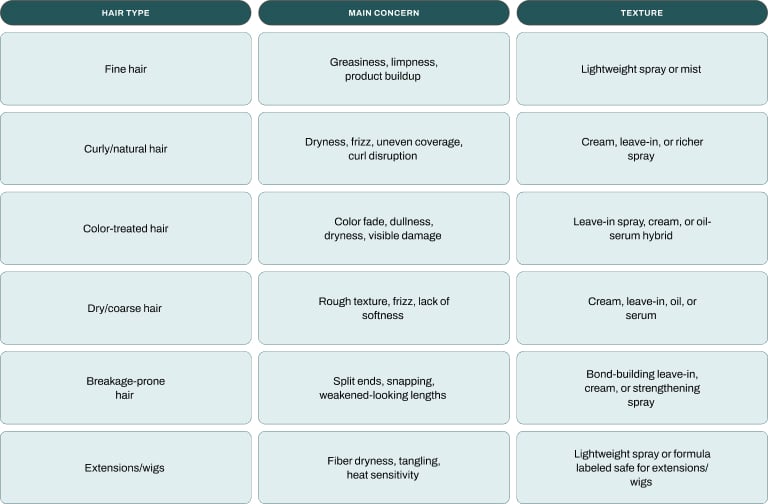
Additionally, when choosing a heat protectant, it’s important to pick a formula that matches your hair type and both styling and haircare needs. Here’s a closer look at several options to help you find the right fit:

Common Mistakes to Avoid
Do:
- Comb It Through: Ensure product is evenly distributed from roots to ends before styling.
- Use Before Every Heat Session: Apply to damp hair before blow drying; reapply on dry hair if using a hot tool like a flat iron or curling wand.
- Let It Dry: If applying to dry hair, give the product a moment to dry before applying heat to avoid a sizzling effect.
Don’t:
- Skip the Ends/Mid-Lengths: In addition to your roots, your ends and mid-lengths also need protection, especially if you’re blow drying for volume or using straighteners from the scalp down.
- Apply Too Much: Over-saturation can cause hair to look greasy or stiff, and doesn’t give added protection.
- Assume Styling Products Replace It: Some stylers offer moderate heat protection, but a dedicated product gives better and more reliable coverage.
How to Apply Heat Protectant Based on Your Styling Tool
The way you apply heat protectant can change depending on whether you’re blow-drying, flat ironing, curling, or using a hot brush. The goal is always the same: coat the hair evenly before heat touches the strand.
Before Flat Ironing:
Mist or work product through damp, towel-dried hair, focusing on lengths and ends. Use a light hand near the scalp to help avoid buildup.
Before Blow-Drying:
If you blow-dried earlier, lightly reapply protectant before using a flat iron, making sure hair is dry before clamping.
Before Curling:
Apply section by section for thorough coverage, particularly on face-framing pieces and ends, which tend to get the most heat exposure.
Before Using a Hot Brush:
Detangle and mist with protectant first, ensuring even application as the brush passes through each section. Focus on the mid-lengths and ends, then use smaller sections for more even styling.
Your Heat Protectant Questions, Answered
How long does heat protectant last on hair?
Protection is generally designed to last until the next shampoo. It’s always a good idea to reapply before each new round of heat styling.
Is it better to put heat protectant on wet or dry hair?
it depends on your styling process. For blow drying, use on damp hair. For flat irons or curling wands, apply a light mist to each section just before styling.
Can heat protectant help with sun and humidity?
Their primary function is to help protect hair from tool-based heat, like blow dryers, curling irons, and flat irons. That said, some formulas include UV filters, antioxidants, or anti-humidity benefits which can support the overall look and feel of healthier hair.
What’s the difference between a regular and bond-building heat protectant?
Traditional protectants form an external shield. Bond-building types also help repair or reinforce the hair's internal structure, particularly after chemical or color treatments. Together, these benefits can create a multi-level approach to helping prevent the look and feel of damage.
Spray vs. Cream: Which is better?
Lightweight sprays are often ideal for fine hair because they can provide even coverage without weighing strands down. Creams can be better for thick, coarse, curly, or textured hair because they often provide more moisture, control, and smoothing benefits while helping distribute protection through denser hair.
Summary
Using a heat protectant is recommended for anyone who uses styling tools. By creating a buffer between your hair and high temperatures, it helps minimize breakage, preserve color, and lock in softness and shine. The key is to use it consistently, apply according to your hair type and styling method, and avoid common mistakes for the healthiest hair possible.
Ready to level up your routine? Explore heat protectants that match your styling habits, and enjoy smoother, stronger, more resilient hair with every blowout or curl.
Product selections are made using editorial research and brand knowledge; personal use or testimonials are noted where applicable.


