


Key Takeaways:
- Color-treated or chemically processed hair is especially porous and vulnerable to chlorine damage.
- Dry, brittle hair lacks the natural oils that can provide a mild protective layer.
- Rapid, thorough cleansing and conditioning after swimming is critical for maintaining soft, manageable hair.
Pool water might feel refreshing during a summer swim, but regular exposure can quickly wreak havoc on your hair. Chlorine strips away natural oils (sebum), roughens the cuticle, and allows dissolved minerals to cling to your strands. The result? Hair that’s dry, brittle, discolored, or left with a sticky, coated texture—especially if your hair is blonde, color-treated, or chemically processed.
Smart swimmers know: the key to preventing chlorine-damaged hair is a two-pronged strategy. Protect your hair from pool water’s effects before you swim, then clarify and rehydrate immediately afterward. Here’s how to build your foolproof defense against summer’s most notorious environmental aggressor.
What Does Chlorine Do to Hair, and Why Does It Cause Damage?
Chlorine is a sanitizing agent that keeps pools safe and clean, but it’s far harsher on your hair than on invisible bacteria. Chlorine molecules interact with the surface of every strand, stripping away sebum—the natural oil that keeps hair soft and lubricated. Without this protective coating, cuticles roughen and lift, creating an opening for water, minerals, and more chemicals.
A raised cuticle acts like an open door: more water and dissolved minerals (including copper and hard-water ions) enter the hair shaft, amplifying texture issues, moisture loss, and potential breakage. For blondes and anyone with lightened or color-treated hair, copper deposits in pool water can oxidize, causing a greenish cast that’s difficult to wash out.
The more you swim, the more pronounced these effects become. Pool chemical and mineral residues compound with each dip; if not removed, hair becomes dull, rough, and harder to detangle. Post-swim dryness, breakage, and even color fading become common for regular swimmers—making both prevention and post-pool maintenance essential.
Products Formulated for Swimmers’ Hair
Choosing the right hair care products designed to address the specific challenges of chlorine exposure can make a significant difference. These formulas contain ingredients aimed at removing buildup and restoring moisture, tailored for hair that spends time in the pool.
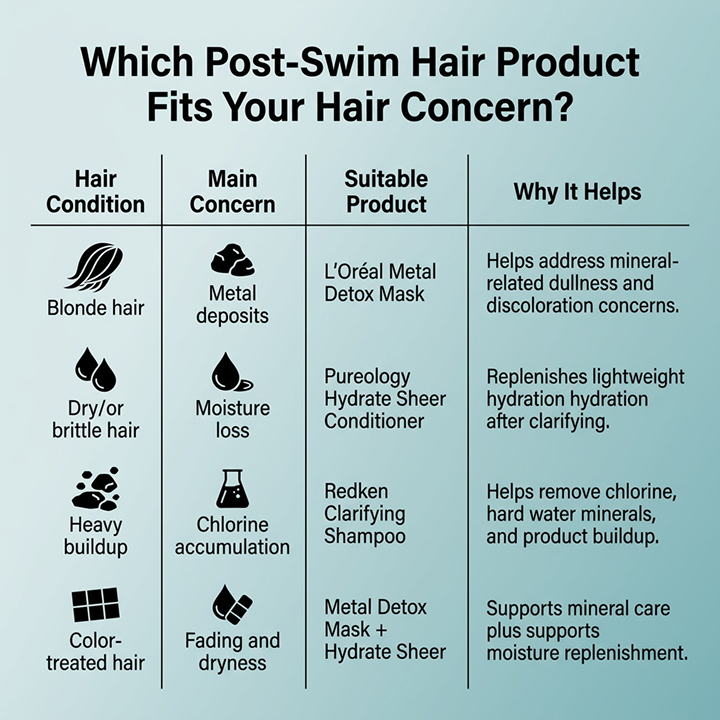
| Product | Ideal For | Key Ingredients | Key Benefit | Post-Swim Step |
|---|---|---|---|---|
| Redken Hair Cleansing Cream Clarifying Shampoo | All hair types, frequent swimmers | Fruit acids & chelating agents | Removes chlorine & mineral | Clarify |
| Pureology Hydrate Sheer Conditioner | Fine, dry, color-treated hair | Jojoba, green tea, & sage | Lightweight hydration | Rehydrate |
| L'Oréal Professionnel Serie Expert Metal Detox Mask | Color-treated or blonde hair | Glicoamine | Neutralizes mineral particles | Treat mineral buildup |
Redken Hair Cleansing Cream Clarifying Shampoo
This clarifying formula targets swimmers’ biggest concern: buildup from chlorine, minerals, and styling products. Fruit acids and chelating agents work together to break down and lift away stubborn residue that leaves hair feeling rough or coated. Use it as your post-pool shampoo to help improve softness and shine.
Pureology Hydrate Sheer Conditioner
After cleansing, rehydrate hair with this lightweight yet deeply moisturizing conditioner. Key ingredients like wheat proteins and eucalyptus leaf extract help moisturize and strengthen hair without weighing it down—suitable for fine, color-treated, or post-pool hair.
L'Oréal Professionnel Serie Expert Metal Detox Mask
Chlorine damage isn’t just about dryness—mineral deposits, especially on color-treated or blonde hair, can cause dullness and discoloration. The Metal Detox Mask, enriched with glicoamine, helps neutralize and remove mineral particles for visibly brighter, more vibrant hair after swimming. Additionally, it helps soften hair with intense nourishment. Use weekly or as needed.
How to Protect Hair from Chlorine Before Swimming
Even the right products can only do so much if your pre-swim habits are missing the mark. Here’s how to shield your hair beforehand:
Step 1: Rinse and Saturate Hair with Clean Water
Before hitting the pool, thoroughly wet your hair with clean tap water. Pre-soaked hair has less capacity to absorb additional (chlorinated) water, so this simple step, while it does not block chlorine completely, can significantly reduce chlorine uptake.
Step 2: Apply a Protective Layer
Follow the rinse with a leave-in conditioner or lightweight hair oil, focusing on mid-lengths and ends (the most fragile and porous part of your hair). This product acts like a cushion, creating a barrier between your strands and the harsh pool environment, reducing friction, dryness, and direct chemical contact.
Tip: Consider using a swim cap for the highest level of protection, especially if you swim frequently or have hair that’s particularly vulnerable to chlorine damage.
Post-Swim Hair Care Routine
Post-swim care has a different job than pre-swim protection. Rinsing and cleansing remove chlorine, minerals, and product residue from the hair surface, while conditioning helps replace slip and softness after clarifying.
Step 1: Rinse Immediately and Cleanse Thoroughly
Rinse hair with fresh water as soon as you leave the pool—don’t let chlorinated water dry on your strands. Next, cleanse with a clarifying shampoo, which contain ingredients designed to help break down buildup and rinse away impurities. Work the lather through from roots to ends and rinse completely to help wash away chlorine, copper, and other minerals.
Step 2: Replenish Moisture with a Deep Conditioner
After clarifying, hair is primed to soak up hydrating ingredients, as clarifying can strip it of moisture. Therefore, it’s important to apply a deep conditioner or mask, focusing again on the lengths and ends. Leave it on for three to five minutes before rinsing to help improve slip, smoothness, and manageability.
FAQ: Chlorine and Swimmers’ Hair Care
From green-tinged hair to long-term dryness, many common questions arise about swimming and hair health. Here are answers to some of the most frequent concerns.
Can you reverse chlorine damage on hair?
While you can’t “reverse” structural hair damage, you can dramatically improve its appearance and texture. Consistent use of clarifying shampoos to remove buildup and deep conditioning masks to replenish moisture can improve the appearance of hair. If the ends are extensively damaged or split, a trim is also an effective step.
How long does it take for chlorine to damage hair?
Chlorine may start to diminish natural oils and increase roughness after just one swim. Noticeable dryness or color change often appears with repeated exposure, especially if you skip rinsing, clarifying, and conditioning steps. Highly porous or treated hair shows changes faster.
Does chlorine make your hair fall out?
Chlorine isn’t known to cause hair to fall from the root, but it may weaken the hair shaft, leading to breakage from the ends or mid-lengths. This breakage can mimic increased shedding, but it’s a mechanical effect, not a scalp or follicle issue.
Will chlorine turn my brown hair green?
A greenish tint from pool water is less common and less noticeable on brown hair than on blonde hair, but it can happen. The discoloration comes not from chlorine itself, but from oxidized copper and hard water minerals that bind to hair protein. While this isn’t usually visible on darker shades, clarifying shampoos will still help prevent buildup.
If I use clarifying shampoo, won’t it strip my color?
Clarifying shampoos are designed for deep cleaning and can fade color if overused. To combat this, choose formulas labeled for color-treated hair (like the ones above) and always follow with a nourishing, color-safe conditioner.
The Bottom LineProtecting your hair from chlorine damage is all about being proactive: reduce your hair’s absorption before swimming and wash out chemicals and minerals immediately afterward. Thorough pre-rinsing, a protective leave-in, clarifying shampoo, and a moisture-boosting conditioner work as a team to help maintain soft, strong, and vibrant-looking hair all season long.
Ready for more healthy hair hacks? Explore more summer hair care guides for tips on defending against sun, salt, and humidity.
Product selections are made using editorial research and brand knowledge; personal use or testimonials are noted where applicable.


