


TL;DR: Keeping curly hair from frizzing requires different strategies for high and low humidity. In high humidity, the goal is to help limit excess moisture from reaching the hair shaft to reduce halo frizz and puffy curls, while in low humidity, the focus is on adding moisture first, then applying a sealant so curls stay smoother and more defined.
Key Takeaways:
- For muggy, high-humidity days: Protect curls from swelling and halo frizz with Garnier Fructis Curl Nourish Curl Air Dry Cream or Diamond Sleek Shine-Coat Smoothing Spray.
- For parched, low-humidity days: Add moisture back in with L’Oréal Paris Elvive Hyaluron Plump Shampoo and Conditioner.
- For ongoing definition and strength: Layer in Garnier Fructis Curl Nourish Curl Air Dry Cream or L’Oréal Paris EverPure Bond Repair Conditioner, whatever the weather.
If you’ve ever wondered why your perfectly defined curls can suddenly become a cloud of frizz the minute you step outside, you’re not imagining it—the secret is in the humidity. When the air is thick with moisture, dry hair soaks it up, causing the cuticle to swell (hello, puff). When it’s dry out, the air actually pulls hydration from your curls, leaving them rough, shrunken, and frizz-prone.
The trick? Tune your products and technique to your environment. Below, discover swaps and tips that will help your curls stay smooth, defined, and healthy—rain or shine.
What's the Difference Between Frizz in High vs. Low Humidity?
Frizz is a universal curly concern, but the root cause—and how it shows up—varies dramatically depending on the humidity.
Frizz in High Humidity
On muggy days, the air is saturated with moisture that curls happily soak up. But too much of a good thing can disrupt your curl pattern, causing strands to swell and puff out. The result? Curls that look big, fuzzy, and prone to losing shape—sometimes even drooping if excess moisture weighs them down.
Frizz in Low Humidity
When the air is dry—think winter, desert climates, or overheated indoor environments—your curls lose their natural moisture to their surroundings. This dehydration lifts the cuticle, leaving curls rough, brittle, and prone to flyaways, frayed ends, and that telltale “halo” of frizz.
In short: Humid air overloads curls with moisture, making them swell and lose definition. Dry air zaps moisture, leaving curls parched and prone to static and flyaways. Understanding the difference is the first step to building a routine that keeps your curls defined and frizz-free, regardless of the forecast.
How Humidity Levels Show Up Across the Seasons
Humidity shifts with the seasons, and so should your curl care. While your local climate always plays a role, the time of year is a pretty reliable guide to how much moisture—or lack of it—is in the air. Here’s what you can expect for your curls as the seasons change:
Summer
- Warm, humid air is common in most climates, especially coastal and tropical regions.
- High-humidity routine: lightweight leave-ins, strong-hold gels, anti-frizz serums.
Fall and Winter
- Indoor heating dries out air, even if it happens to be humid outside.
- Low-humidity routine: richer leave-ins, deep conditioners, glycerin-based products.
Spring
- The most unpredictable season, often swinging between damp and dry within the same week.
- Go by symptoms, not season: static and tightness call for the low-humidity fix, puffiness and swelling call for the high-humidity fix.
Does Your Porosity Affect How Humidity Impacts Your Curls?
Porosity—how easily your hair absorbs and holds moisture—plays a major role in how humidity affects your curls. High-porosity hair absorbs moisture quickly and loses it just as fast, making it reactive to every change in the air. Low-porosity hair resists moisture absorption, which means products can sit on top without penetrating.
What Your Porosity Means for Humidity
- High porosity: Hair that dries quickly, absorbs products fast, and frizzes easily in humid weather may absorb moisture from the air rapidly, leading to swelling and frizz. Use heavier sealants like oils, butters, and strong-hold gels to help lock the cuticle down.
- Low porosity: Hair that dries very slowly or leaves products sitting on the surface may be less reactive to humidity but more prone to buildup. Use lighter, water-based products and apply them onto damp, not soaking, hair for better distribution.
How to Care for Curly Hair in High Humidity
In high humidity, your curly hair routine should focus on smoothing the cuticle and limiting how much environmental moisture reaches the hair shaft. Lightweight leave-ins, gels, serums, and finishing products can help curls hold their shape while reducing puffiness, halo frizz, curl droop, and weather-related loss of definition.
Choose the Right Styling Products
For humid weather, look for styling products that help seal the hair surface rather than overload curls with moisture. Anti-frizz serums, strong-hold gels, humidity-resistant sprays, and lightweight oils can create a smoother finish and help curls keep their shape when the air feels damp or sticky.
Key Product Types Include:
- Anti-Frizz Serums: Often silicone-based, they provide a strong seal against humidity.
- Defining Gels: Gels that create a "cast" can lock out moisture while setting curls.
- Finishing Sprays: Look for weather-resistant or humidity-shielding hairsprays.
How to Care for Curly Hair in Low Humidity
In low humidity, curls need moisture support before they need a strong seal. Start with hydrating products like leave-in conditioners, curl creams, or deep conditioners, then layer a light oil, butter, or cream to help reduce moisture loss and keep curls soft, flexible, and defined.
Layer Moisturizing Products
Layering matters in dry air because curls need both hydration and retention.
- Apply a moisturizing leave-in or curl cream first
- Follow with a sealant to help keep that moisture in place.
- Humectants like glycerin can help when balanced with oils, but they should not be the only moisture-support step.
The 5-Step Product List for Humidity-Resistant Curls
Anti-frizz for curly hair is not about finding one miracle product—it’s about building a stack in the right order. Each layer serves a purpose: hydration first, hold second, seal last. Skipping steps or applying in the wrong order can leave curls either overloaded or unprotected.
| Step | Product Type | Why It Matters | High Humidity Focus | Low Humidity Focus |
|---|---|---|---|---|
| 1. Cleanse | Sulfate-free shampoo | Stripping oils increases porosity, which increases frizz | L’Oréal Paris Elvive Hyaluron Plump Shampoo | L’Oréal Paris Elvive Hyaluron Plump Shampoo |
| 2. Condition | Deep conditioner or mask | Pre-loads moisture so hair does not absorb it from the air | L’Oréal Paris EverPure Bond Repair Conditioner | L’Oréal Paris Elvive Hyaluron Plump Conditioner |
| 3. Leave-in | Leave-in conditioner | Sets a moisture baseline to help reduce absorption of ambient moisture | Garnier Fructis Curl Nourish Curl Air Dry Cream | Garnier Fructis Curl Nourish Curl Air Dry Cream |
| 4. Style | Strong-hold gel | Creates a cast that blocks humidity | Garnier Fructis Curl Nourish Curl Air Dry Cream layered under gel | Garnier Fructis Curl Nourish Curl Air Dry Cream + light gel |
| 5. Seal | Anti-humidity serum or oil | Final barrier — 1-2 drops maximum | Garnier Fructis Diamond Sleek Shine-Coat Smoothing Spray | Lightweight oil or serum as final seal |
Products for Frizzy Curly Hair
The right product choice depends on what is causing your frizz. Some curly hair needs a humidity shield to help block damp air, while other curls need richer moisture support to help prevent dryness. The following product options target different curly hair concerns, from halo frizz and puffy curls to flat curls, curl droop, and everyday definition.
Curl Cream for Definition: Garnier Fructis Curl Nourish Curl Air Dry Cream
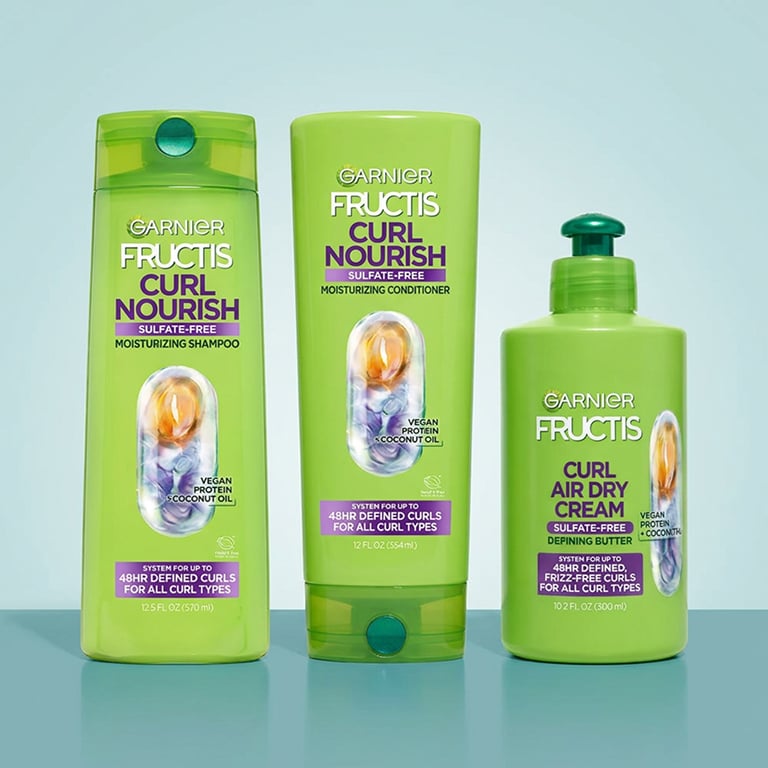
Garnier Fructis Curl Nourish Curl Air Dry Cream can be used as a moisturizing base before hold or sealing products. The leave-in formula is designed for curly and wavy hair that needs definition support, frizz control, and a softer-looking finish without heat styling tools. When used with Curl Nourish shampoo and conditioner, it helps nourish curls for up to 48 hours of moisture and definition***. Apply it onto damp hair before gel or a finishing product to help shape curls and support a smoother routine.
Ideal For: Curly and wavy hair that needs a moisturizing base before hold or sealing products.
Smoothing Seal: Garnier Fructis Sleek & Shine Diamond Sleek Shine Coat Smoothing Spray
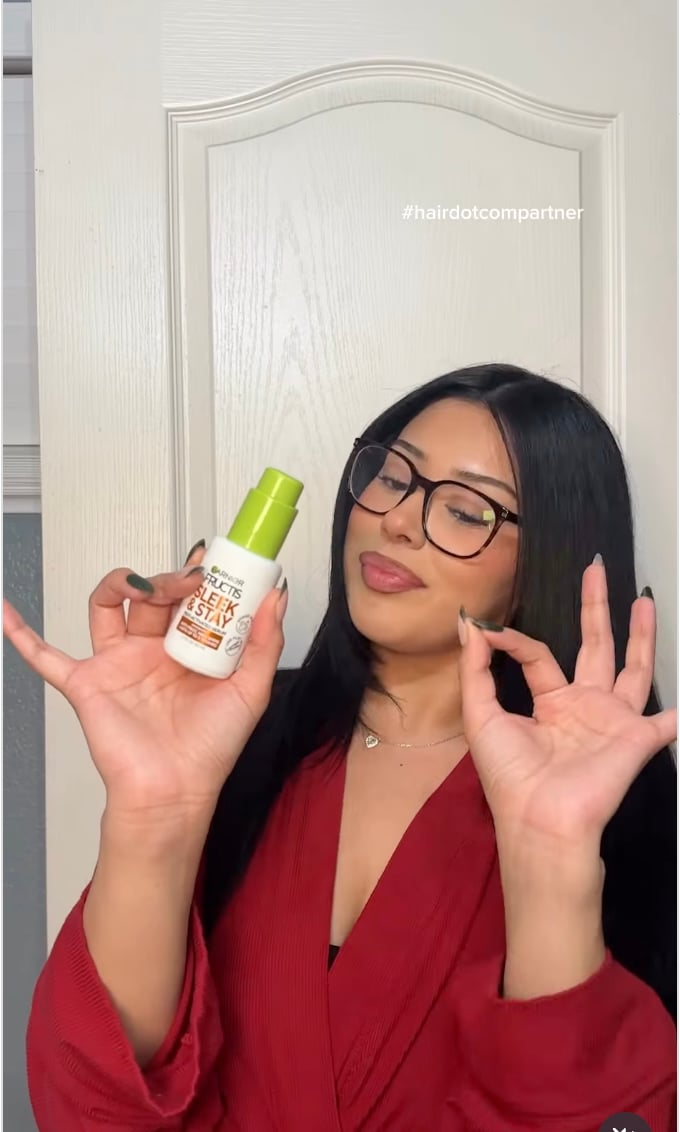
Garnier Fructis Diamond Sleek Shine-Coat Smoothing Spray can be used as a finishing step for humid-weather frizz control. Apply it onto styled hair after curl cream and gel when curls need a lightweight surface seal. The formula is designed to provide up to 100 hours of frizz-free sleek and diamond-like shine* while helping reduce the appearance of halo frizz, flyaways, and puffy curls without adding a heavy cream layer.
Ideal For: Humid days, halo frizz, flyaways, and curls that need a smoother finish without a heavy cream layer.
Low-Humidity Moisture Support: L’Oréal Paris Elvive Hyaluron Plump Shampoo and Conditioner
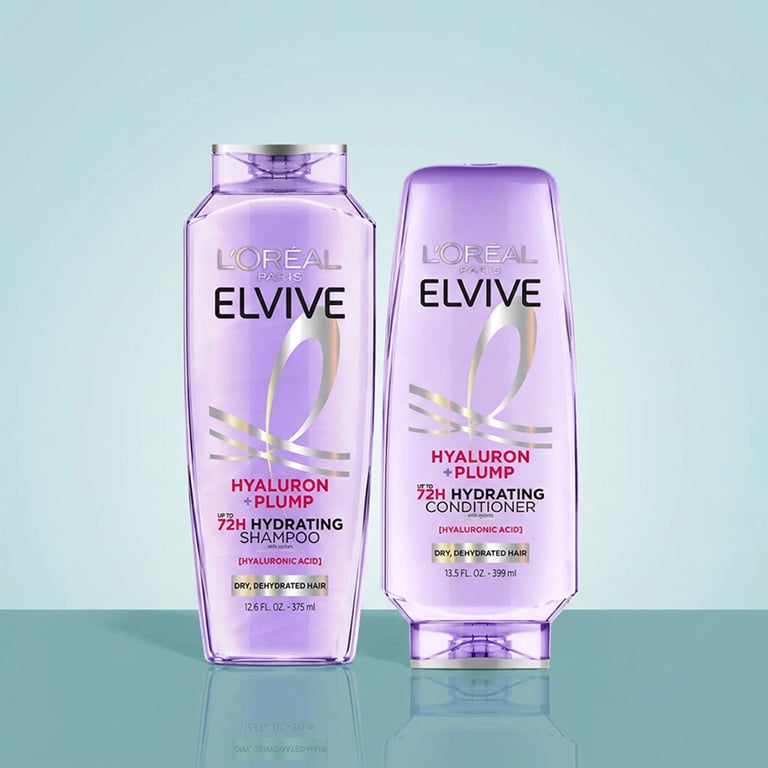
L’Oréal Paris Elvive Hyaluron Plump Shampoo and Conditioner can support a low-humidity routine when curls feel dry or less flexible. Use the shampoo and conditioner as the wash-day moisture foundation before applying leave-in cream and styling products onto hair. This pairing helps prep curls for additional moisture-support steps in dry indoor air or seasonal low-humidity conditions, designed to be used for up to 72 hours.
Ideal For: Low-humidity routines, dry indoor air, and curls that need moisture support before styling.
Curly Hair Techniques That Help Control Frizz in Humidity
The right products matter, but technique can be the difference between curls that hold and curls that frizz out within an hour. The following methods are especially important in humid conditions, where timing, drying, and handling all effect how well your style lasts.
Dry Completely Before Going Outside
Heading outside with damp or semi-dry hair in humid weather is one of the fastest ways to lose curl definition. When hair is still wet, it continues to absorb moisture from the air, which can cause curls to swell, separate, and frizz. Use a diffuser on low heat if air-drying takes too long, and wait until your hair is 100 percent dry before stepping out.
The “Don't Touch” Rule
Touching, scrunching, or adjusting curls while they are drying can break the gel cast before it fully sets. This leaves the hair shaft exposed to humidity with no protective barrier. Let curls dry undisturbed, then gently scrunch out the crunch once hair is completely dry to reveal soft, defined curls. However, even once curls are dry, refrain from excessively touching your hair. And never brush or comb dry curls unless you’re going for a teased-out effect.
Day 2-3 Curl Refresh Without Rewashing
Rewetting your entire head can reset the frizz cycle. Instead, use a light mist of water or a curl refresher spray on specific sections, then scrunch and reshape areas with flat curls, curl droop, or visible flyaways. If you need more hold, apply a small amount of gel to problem areas only.
When Should You Switch Your Curly Hair Routine?
Many people notice their curls behave differently when fall arrives, but they are not sure when to adjust their routine. The trigger is not the calendar—it’is when indoor heating turns on. Dry indoor air pulls moisture out of hair, creating static and dryness that summer products were not designed to address.
During the weeks when summer is ending but fall has not fully set in, layer lighter products and watch how your hair responds before making a full routine swap. If you notice static, flyaways, or a tighter, drier feel—especially indoors—it’s time to shift from humidity-blocking products to moisture-boosting formulas. Humectants like glycerin, which can cause frizz in summer humidity, become helpful again when the air is dry.
Your Curly-Hair Frizz Questions, Answered
How can I reduce frizz while sleeping?
Protecting your hair at night can significantly reduce frizz. Sleeping on a silk or satin pillowcase minimizes friction that can rough up the hair cuticle. You can also loosely tie your hair up in a "pineapple" (a high, loose ponytail on top of your head) using a gentle tie like a scrunchie or wear a satin bonnet or scarf.
What is a "curl cast" and does it help frizz?
A curl cast is the firm layer that can form after applying a styling gel and letting it dry. The cast helps hold curls in place and creates a protective layer around the hair. Once your hair is fully dry, gently scrunch curls to soften the finish while maintaining definition.
What's the best routine for curly hair in fall?
When fall arrives, shift from anti-humectant products to hydrating formulas. Indoor heating creates dry air that pulls moisture out of hair, causing static and brittleness instead of the swelling frizz you see in summer. Add a richer leave-in conditioner or curl cream, and consider reintroducing glycerin-based products when the air is dry.
Does gel or mousse work better for curly hair in humidity?
Gel is generally the stronger choice for humid conditions. Gels create a firmer cast around curls that acts as a physical barrier against moisture in the air. Mousses tend to offer lighter hold, which may not be enough to prevent humidity from disrupting curl definition. Apply gel to soaking wet hair, let it dry completely, then scrunch out the crunch.
Garnier:
*vs a non-conditioning shampoo
**vs unwashed hair
*** when used with Curl Nourish shampoo and conditioner.
Product selections are made using editorial research and brand knowledge; personal use or testimonials are noted where applicable


