


If your hair keeps snapping, feels gummy when wet, frizzes no matter what you use, or looks dry even after conditioning, your hair may need a particular kind of support—not just a catch-all “damaged hair” fix.
Key Takeaways
- Hair that snaps with little stretch often needs moisture.
- Hair that feels gummy, overly stretchy, or limp when wet may need protein or strengthening.
- If your hair feels weak when wet but brittle when dry, alternate protein and moisture.
- The right treatment matches the symptom: brittle hair needs flexibility, gummy hair needs structure, “mixed” needs both.
When your hair breaks, frizzes, tangles, or stays dry no matter what you use, it’s time to decode what your strands are lacking. Protein and bond-supporting products reinforce weak, stretchy hair; moisture-focused products restore softness to dehydrated, brittle hair.
Use the at-home stretch test below to diagnose your hair—and build a routine responsive to how hair behaves after washing, conditioning, and styling.
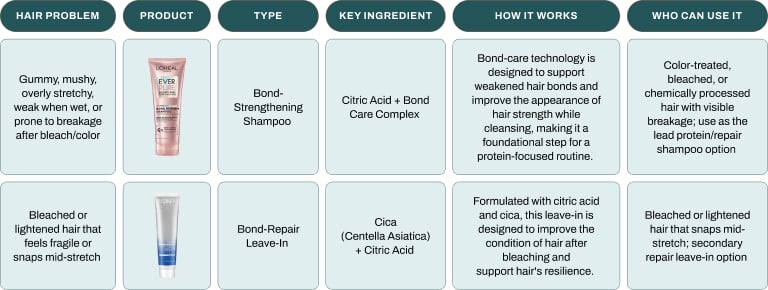
- Protein/repair shampoo: L'Oréal Paris EverPure Bond Strengthening Shampoo
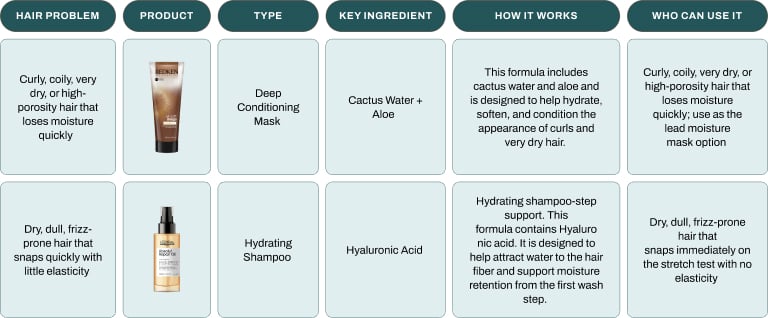
- Moisture mask: Redken All Soft Mega Mega Mask
- Hydrating shampoo: L'Oréal Paris Elvive Hyaluron + Plump Hydrating Shampoo, Pureology Hydrate Shampoo and Hydrate Conditioner
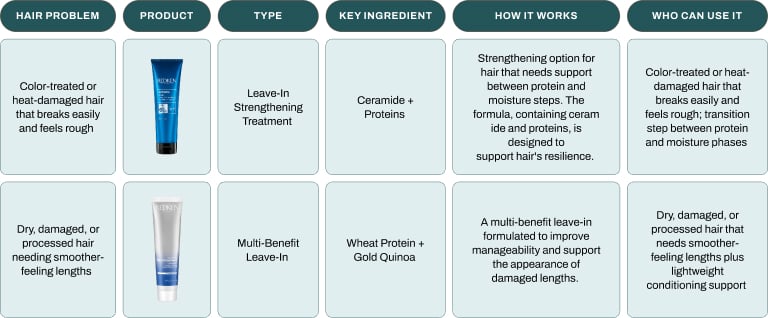
- Repair leave-in: Redken Extreme Bleach Recovery Cica Leave-In, Redken Extreme Rescue Force Treatment
- Professional options: L'Oréal Professionnel Absolut Repair 10-in-1, Kérastase Résistance Bain Force Architecte, Kérastase Nutritive Masquintense, Kérastase Résistance Masque Thérapiste, L'Oréal Professionnel Serie Expert Pro Longer.
What Is the Difference Between Protein and Moisture for Hair?
Protein is formulated to help reinforce structure, targeting problems like excessive stretchiness, weakness, and post-bleach breakage by supporting hair’s keratin matrix. Moisture addresses brittleness, roughness, tangling, and dryness, using hydrating agents to attract water, help smooth the cuticle, and boost flexibility.
In simple terms:
Protein = Strands that appear stronger, bounce-back, structure
Moisture = Softer, more flexible hair, reduced breakage, manageability
Clear symptom-checking is your shortcut:
Gummy or overly stretchy hair = needs structure/support (protein)
Brittle, snapping hair = needs flexibility/softness (moisture)
When it comes to repairing damaged hair, one of the simplest and most effective diagnoses is the stretch test. Rather than guessing—which can often lead to product overload or the wrong solution—the stretch test gives you a clear, science-backed way to identify exactly what your strands are missing. It’s all about elasticity: how much your hair stretches when wet, and whether it returns to its original shape.
The Science Behind the Stretch Test
Hair is made up of proteins (like keratin) and needs the right balance of strength and flexibility. When you stretch a wet strand, you're testing both its structural integrity (protein) and its ability to hold onto moisture. Hair that is low on moisture tends to be brittle and snaps easily, while protein-depleted hair becomes weak, limp, gummy, or overly stretchy. Sometimes, hair can even display both problems in different areas—especially if it's color-treated, bleached, or heat-styled.
Keep in mind: Results can vary by hair type, porosity, previous chemical processing, and even how saturated your hair is during the test. The stretch test is your directional guide, but always confirm with how your hair feels and responds after everyday washing, conditioning, and styling.
The Stretch Test: Your Quickest At-Home Diagnosis
Follow these simple steps:
- Wet a small section of clean hair.
- Hold one end between your thumb and forefinger of each hand, pulling the strand taut.
- Gently pull both ends away from each other and observe what happens.
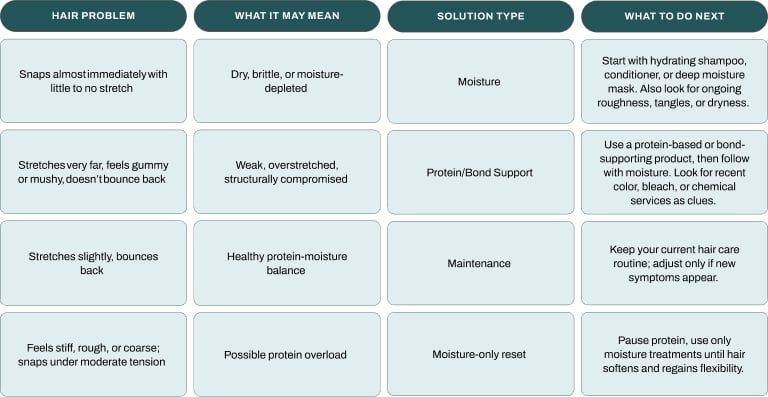
Tip: Let your test results guide your product selection—targeting the symptom, not just a category. Use the next sections as your problem/solution map to build a healthy, responsive hair routine.
If Your Hair Feels Gummy or Overly Stretchy, Start With Protein
Protein-based products (keratin, peptides, bond-builders) reinforce hair structure and help reduce stretchiness or breaking in color, bleach, or chemically processed hair.
If Your Hair Snaps Quickly or Feels Brittle, Start With Moisture
Start here if hair snaps quickly, feels brittle, tangled, frizzy, or still feels dry after conditioning.
If Your Hair Feels Weak When Wet but Dry When Styled, You May Need Both
For hair that feels limp or gummy when wet but brittle when dry, alternate strengthening and moisture steps.
How to Build a Hair Routine Based on the Problem
For a Moisture-First Routine:
Lead with hydrating shampoo and conditioner. Add masks for dull, tangled, or frizzy hair. Reserve strengthening products for when hair regains flexibility.
For a Protein-/Strengthening-First Routine:
Use when hair is limp, weak, or overly stretchy. Always follow with a conditioner to improve softness.
For a Mixed-Needs Routine:
Alternate strengthening and moisture steps, and don't overlayer products. High-porosity, chemically processed, or curly hair often shifts between needs.
If Hair Starts to Feel Stiff or Overloaded:
Pause protein or heavy moisture. Use the stretch test and daily styling as your guide.
Can You Overdo Protein or Moisture?
Yes. Gradually adjust, test often, and treat the primary symptom for best results.
Remember:
- Too much protein = stiffness, breakage, rough texture, snapping.
- Too much moisture = limpness, excessive stretching, no style hold.
How Do I Know if My Hair Is Balanced?
Balanced hair has slight "bounce-back," shows reduced breakage, appears smooth and strong, and styles well. The stretch test is your go-to for an ongoing hair routine diagnosis.
The Goal Is Balance
Protein and moisture work best with gradual adjustments. Your hair needs will change by season, styling, and chemical treatments—so use the elasticity stretch test to "read" what's needed and adjust your ritual, not just pile on ingredients.
Product selections are made using editorial research and brand knowledge; personal use or testimonials are noted where applicable.


