


TL;DR: Choosing between argan oil and jojoba oil depends on your hair's needs. Argan oil is richer and ideal for moisturizing dry, thick, or damaged hair, while products with jojoba oil are formulated to be lightweight, making them a suitable choice for fine hair.
In the world of natural ingredients, few oils command as much respect as argan and jojoba. For those who view hair care as an extension of holistic wellness, understanding the subtle yet significant differences between these two botanical powerhouses is key to supporting your hair's overall appearance and aligning your routine with nature.
First, it’s important to note that while both oils are celebrated for their nourishing properties, they are not interchangeable. Each possesses a unique molecular structure and nutrient profile that make it better suited for specific hair types and concerns. Knowing these differences is essential for achieving your desired results without compromising.
Ahead, find a guide to understanding the differences between argan oil and jojoba oil.
Key Takeaways
- Products With Argan Oil are often formulated as heavier moisturizers, used for deep conditioning, adding shine, and helping to improve manageability for thick or coarse hair
- Products With Jojoba Oil are often formulated to be lightweight, making them a great option for addressing the look of excess oil while adding softness without weighing down fine hair.
- The choice depends on your primary goal. Argan-based products for addressing dryness. Jojoba-based products for addressing the look of oiliness.
Jojoba Oil for Hair
Jojoba (pronounced ho-ho-ba) oil is a unique substance derived from the seed of the jojoba plant, native to North American deserts. Unlike other plant oils, it is technically a liquid wax ester, which gives it a molecular structure remarkably similar to the natural sebum produced by our own scalps. This unique characteristic makes it highly compatible with human hair and skin.
Key Characteristics:
Biomimetic Structure: Its composition closely mimics the scalp's natural oils, allowing it to help balance oil production.
Lightweight & Non-Greasy: Products containing jojoba oil are often formulated to provide moisture without weighing hair down.
High Stability: As a wax ester, it is more stable and has a longer shelf life than many traditional oils.
Rich in Nutrients: Contains beneficial nutrients like vitamin E, B-complex vitamins, and key minerals.
What Are the Benefits of Products With Jojoba Oil?
Jojoba oil's primary function is to provide lightweight hydration and balance. Its sebum-like properties allow it to moisturize the hair strand and scalp without disrupting its natural state.
Addresses Excess Oil: Formulas with Jojoba Oil can help reduce the appearance of oil on the scalp and hair, promoting a more balanced look.
Lightweight Moisturization: It provides hydration without weighing hair down, making it an ideal choice for finer hair types.
Frizz & Flyaway Control: A small amount can smooth the hair cuticle to tame frizz and add a natural-looking, non-greasy shine.
Moisture Sealing: For textured hair, including 4c types, it acts as an effective sealant to lock in water-based leave-in conditioners.
What Hair Types Does Jojoba Oil Work For?
Jojoba oil is exceptionally versatile. Here’s a breakdown:
Fine/Thin Hair: Its lightweight nature provides moisture and shine without causing the hair to look flat or greasy.
Oily Hair & Scalps: Its lightweight properties make it a great choice for products designed for oily hair, as they can moisturize without adding excess weight or a greasy appearance.
Low Porosity Hair: Because it absorbs easily, it can penetrate low-porosity hair more effectively than heavier oils.
4C Hair: It's an excellent choice for sealing in moisture as part of a LOC (Liquid-Oil-Cream) or LCO (Liquid-Cream-Oil) method without causing heavy buildup.
How to Use Jojoba Oil
As a Finishing Oil: Warm 1-2 drops between your palms and lightly smooth over dry hair to tame frizz and add shine.
As a Pre-Shampoo Scalp Treatment: Using your fingertips, gently massage a small amount directly onto your scalp. Leave on for 20-30 minutes before shampooing to help balance oiliness.
As a Leave-In Moisturizer: Apply a very small amount to damp, clean hair, focusing on the mid-lengths and ends to help seal in moisture.
Jojoba Oil Product Options: Biolage Professional All-In-One Multi-Benefit Oil
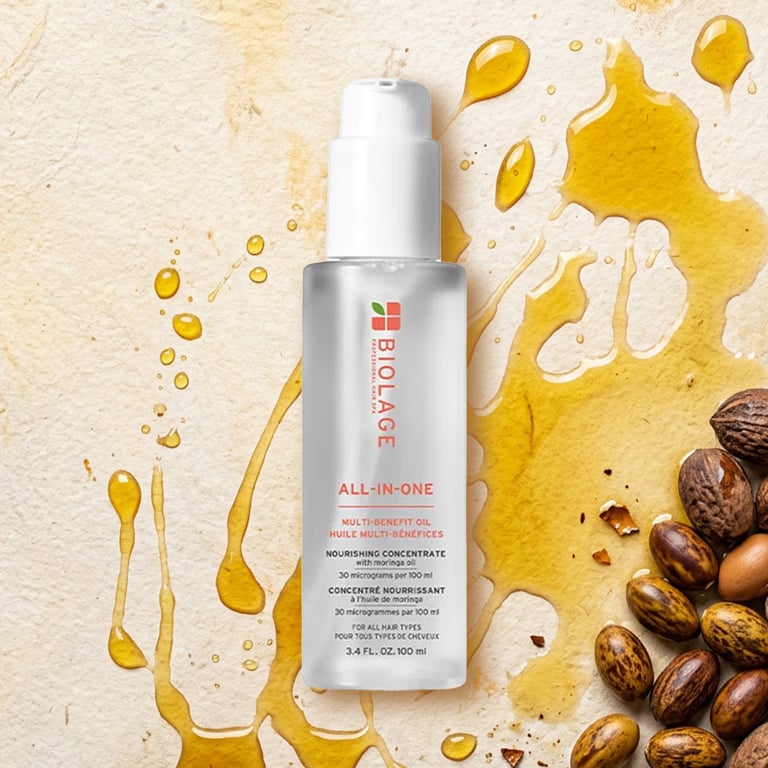
Biolage All-In-One Multi-Benefit Oil delivers on the lightweight promise that those who use jojoba oil often seek. This fast-absorbing, vegan formula is suitable for all hair types and provides shine, smoothness, and frizz control without heavy residue, echoing the primary benefits of jojoba oil.
Suitable For: All hair types seeking lightweight moisture, shine, and frizz control.
Argan Oil for Hair
Often referred to as “liquid gold,” argan oil is an oil extracted from the kernels of the argan tree, which is native to Morocco. For centuries, it has been a treasured beauty staple for its ability to nourish and moisturize hair and skin. Its composition is rich in fatty acids and powerful antioxidants, making it a potent ingredient for addressing the appearance of damaged hair.
Key Characteristics:
Rich & Nourishing: It has a richer, more viscous texture compared to lighter oils like jojoba.
High in Fatty Acids: It is packed with oleic and linoleic acids, which are essential for maintaining hair health and moisture.
Vitamin E Powerhouse: It is exceptionally rich in Vitamin E, a potent antioxidant that helps protect hair from damage.
Source: Derived from the kernels of the Moroccan argan tree.
What Are the Benefits of Products with Argan Oil?
Argan oil is a deep conditioner and reparative treatment. Its main purpose is to deliver intense moisture, improve hair's elasticity, and restore shine to dull, damaged strands.
Deep Moisturization: Formulas with argan oil are known for providing intense moisture, leaving hair with a hydrated and soft appearance.
Addresses Breakage: When used in a haircare system, products with argan oil can help improve hair’s manageability and protect against breakage that can occur from brushing and styling.
Enhances Shine: It smooths the hair cuticle, creating a smooth surface that reflects light for a brilliant, healthy-looking shine.
Provides Thermal Protection: Many argan oil-infused formulas offer protection from heat styling tools.
What Hair Types Does Argan Oil Work For?
Argan oil's rich nature makes it a suitable solution for hair types that require intense hydration and repair.
Dry or Brittle Hair: It is an ideal treatment for hair that feels rough and lacks moisture.
Thick or Coarse Hair: These hair types can handle the richness of argan oil, which helps to soften texture and improve manageability.
Damaged or Color-Treated Hair: The nourishing properties help to repair damage from chemical processes and heat styling.
High Porosity Hair: This hair type readily absorbs the deep moisture that argan oil provides.
How to Use Argan Oil
As a Leave-In Treatment Apply 1-2 pumps to clean, damp hair from mid-lengths to ends to detangle, soften, and prepare for styling.
As an Overnight Mask: For an intensive treatment, apply a generous amount to dry hair, focusing on the ends. Wrap hair in a silk scarf and shampoo out in the morning.
As a Finishing Serum: Use a small amount on dry hair to smooth down frizz, add shine, and give hair a polished look.
Argan Oil Product Options: Kérastase Elixir Ultime L'Huile Originale Hair Oil
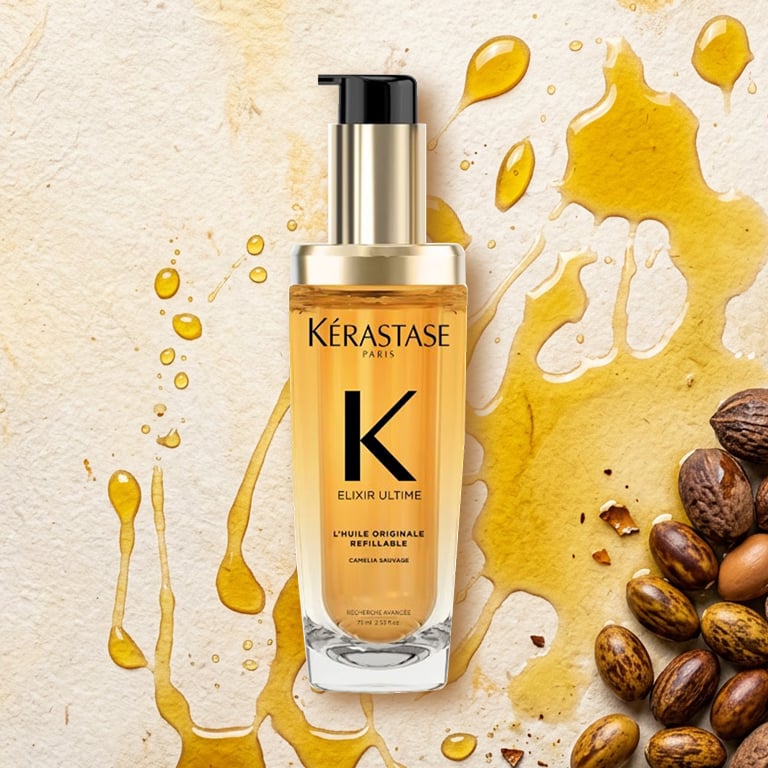
The Kérastase Elixir Ultime L'Huile Originale Hair Oil features a powerful blend of precious oils, including argan oil, to deeply nourish dull hair, provide heat protection, and deliver long-lasting shine and frizz control without a greasy appearance.
Suitable For: All hair types, especially those with dry, dull, or frizz-prone hair, seeking nourishment and shine.
| Factor | Argan Oil | Jojoba Oil | Why It Matters for You |
|---|---|---|---|
| Hair Type | Thick, coarse, curly, wavy, or dry hair. | Fine, thin, straight, or oily hair. | Matching oil weight to hair density is key for performance without sacrificing volume. |
| Porosity | High or medium porosity hair. | Low or medium porosity hair. | Argan seals porous cuticles, while Jojoba absorbs into tightly-bound cuticles more easily. |
| Primary Benefit | Deep moisturization, frizz control, and shine. | Scalp balance, oil control, and lightweight softness. | Choose based on your main goal: Are you fighting dryness and damage, or oiliness and buildup? |
| Feel & Texture | Richer, more viscous feel. | Very lightweight, silky, and fast absorbing. | Your sensory preference matters; Jojoba feels less "oily" and disappears into the hair. |
Your Hair Oiling Questions, Answered
Is argan oil or jojoba oil better for hair growth?
Neither oil is approved to promote hair growth. However, keeping the scalp clean is an important part of any hair routine. Products with jojoba oil can be used in a pre-shampoo treatment to help cleanse the scalp of excess oils and product buildup, leaving it feeling clean and refreshed.
How often should I use hair oil?
This depends on your hair type and the oil you use. Lightweight oils like jojoba can be used daily in small amounts on the scalp or ends. Heavier oils like argan are typically best used 2-3 times a week as a finishing product or weekly as a deeper treatment. Listen to your hair; if it appears weighed down, reduce the frequency.
Can I leave argan oil in my hair overnight?
Yes, using argan oil as an overnight treatment can be very beneficial, especially for very dry or damaged hair. Apply a generous amount to your mid-lengths and ends, wrap your hair in a silk scarf or use a protective hairstyle, and shampoo it out in the morning. This deep conditioning treatment can leave your hair with a very soft and moisturized appearance.
What's the difference between argan oil and Moroccan oil?
Argan oil is a pure oil from the argan tree. "Moroccan oil" is often a brand name or a product that features argan oil as a key ingredient but is typically a proprietary blend that also includes other silicones and oils. While a product labeled "Moroccan oil" contains argan oil, it's not the same as 100% pure argan oil. Kérastase Elixir Ultime is an example of a professional oil blend.
Will argan oil weigh my fine hair down?
It can, if you use too much. For fine hair, it's best to use a very small amount of argan oil (a single drop) and focus it only on the very ends of your hair. Alternatively, look for a lightweight product blend like Redken's Frizz Dismiss Oil-In-Serum that provides benefits without the weight.
What are the benefits of using jojoba oil for 4c hair?
Jojoba oil is great for 4c hair because it effectively seals in moisture applied from leave-in conditioners and water without being too heavy. It can add shine, reduce breakage, and won't cause as much buildup as some other oils, making it a perfect sealant in a LOC or LCO method routine.
Is jojoba oil a sealant or a moisturizer?
Jojoba oil functions primarily as a sealant. It works by forming a light layer over the hair strand, which helps to lock in the moisture (water) that is already in your hair from washing or leave-in products. While it has some moisturizing properties, its main strength is preventing moisture loss.
Can I use these oils on my skin?
Yes, both argan oil and jojoba oil are non-comedogenic and widely used in skincare. Jojoba oil is fantastic for all skin types, including oily and blemish-prone skin, due to its sebum-regulating properties. Argan oil is a rich moisturizer, ideal for dry or mature skin types.
What's the best way to apply jojoba for hair frizz?
The best way is to use it as a finishing touch on dry hair. Place a single drop in your palms, rub them together, and then lightly smooth your palms over any frizzy areas or flyaways. This will tame frizz and add shine without disturbing your hairstyle or making your hair greasy.
Does argan oil help with split ends?
No oil can permanently "heal" or "fix" split ends—the only way to get rid of them is to trim them. However, argan oil can temporarily seal the split ends, making them appear smoother and less noticeable. Regular use can also help prevent future splits by keeping the hair moisturized and elastic.
Product selections are made using editorial research and brand knowledge; personal use or testimonials are noted where applicable


