


Key Takeaways:
- Hair that feels overly soft, stretchy, or limp may benefit from a protein-focused strengthening shampoo and conditioner.
- Hair that feels dry, rough, or brittle may benefit from a moisture-focused shampoo and conditioner rather than additional protein.
- Color-treated or chemically processed hair may benefit from a gentle, color-safe strengthening system or treatment mask.
- Protein treatments can help improve the look and feel of weakened strands, but they can’t permanently repair damaged hair.
So, how can you tell what your hair actually needs? Start by paying attention to how your strands feel. Protein treatments typically contain ingredients such as hydrolyzed proteins or amino acids, which can help temporarily strengthen and smooth the hair’s surface. While they can’t permanently repair damage to the hair fiber, they may help hair feel more resilient, manageable, and less prone to breakage.
The key is finding the right balance of strengthening and moisture for your hair. If your strands are feeling a little too soft and stretchy, protein might be just what your routine is missing. If they’re feeling dry and brittle, hydration may be the better place to start.
Here’s how to tell if your hair needs a protein treatment—and how to work one into your routine.
How Do You Know If Your Hair Needs Protein?
Before reaching for a protein treatment, take a closer look at your hair’s condition. Hair that may benefit from protein often behaves differently from hair that is simply dry, so noticing changes in texture, strength, and elasticity can help guide your next step.
It’s also important to consider whether product buildup may be affecting how your hair feels. If strands feel coated, unusually dull, or difficult to assess, clarify according to the product directions, then reevaluate the hair’s elasticity and texture before adding another treatment.
While elasticity is one helpful clue, no single at-home test can diagnose every concern. When wet, a strand that stretches slightly and returns to its original length is generally balanced. Hair that stretches excessively without bouncing back or feels gummy may benefit from strengthening care, while hair that snaps quickly or feels stiff may need moisture, less protein, or a professional assessment.
Signs Your Hair May Benefit from Protein
Pay attention to how your hair feels and behaves from one wash day to the next. If curls have lost their bounce, straight hair no longer holds a style, or strands feel unusually limp, a protein-infused product may be worth considering.
Your Hair May Need Protein If:
- It has high porosity: Your hair absorbs water quickly but doesn't retain it, and it may feel gummy or overly soft when wet.
- It feels limp or stringy: The hair lacks its usual body and structure.
- It has lost its elasticity: When you gently pull a wet strand, it stretches out more than usual and doesn't bounce back.
- It has been recently colored or chemically treated: These processes can compromise the hair's natural protein structure, making it more susceptible to damage.
- Arginine
- Soy Protein
- Keravis
- Astaxanthin
Can You Use Too Much Protein on Your Hair?
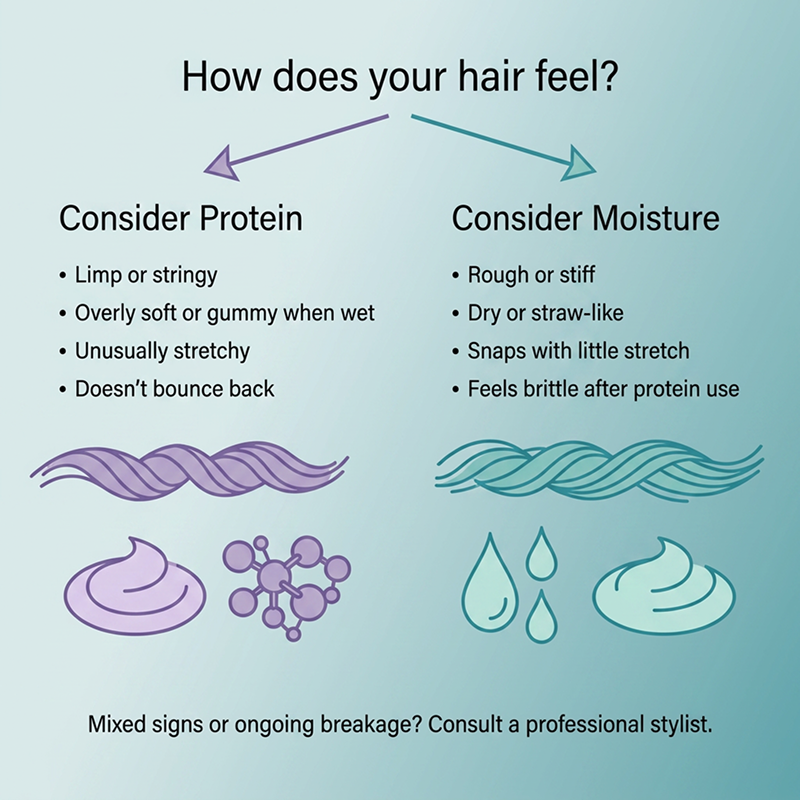
Effectively, yes. While protein can be useful for some hair concerns, it is not always the answer. Adding more protein when your hair does not need it may leave strands stiff, dry, and more prone to breakage—a response often described as protein overload.
Protein overload can occur when protein-rich products are used too frequently, causing buildup along the hair shaft. The result may be rigid, brittle strands with less flexibility. Low-porosity hair may be especially sensitive because its compact cuticle can make buildup more noticeable.
Signs of Protein Overload
Hair with excess protein may feel rough or straw-like and snap with little stretching. It can also look dull or remain unusually dry even after conditioning. If you notice these signs, pause protein-heavy products and shift toward a moisture-focused routine.
Combating Protein Overload
Because low elasticity can also reflect dehydration, consider recent product use and how the hair responds after conditioning. A moisture-focused routine may include L'Oréal Paris Elvive Hyaluron Plump Hydrating Shampoo and L'Oréal Paris Elvive Hyaluron Plump Hydrating Conditioner.
It’s also a good idea to check more than masks when reducing protein. Hydrolyzed keratin, wheat, silk, rice, soy, collagen, amino acids, and peptides may also appear in shampoos, conditioners, leave-ins, and styling products. Reviewing the full routine can help identify overlapping protein sources.
Two Protein Hair Care Systems for Different Types of Damage
As outlined above, if your hair feels weak, overly stretchy, or prone to breakage, consider protein-formulated products that match your needs. Options range from shampoos and conditioners for regular care to more intensive masks for damaged or chemically processed strands.
For Hair That Feels Weak and Breaks Easily: Redken Extreme Shampoo and Redken Extreme Conditioner
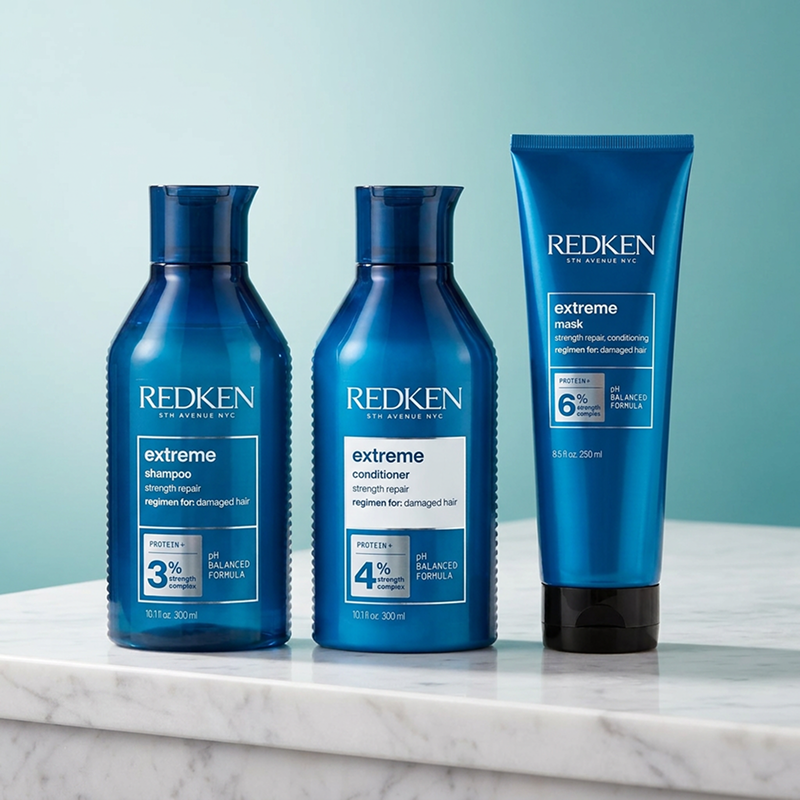
The Redken Extreme system is designed for hair that is distressed and damaged. The shampoo cleanses and helps fortify weakened areas, while the conditioner is formulated to smooth the hair’s cuticle and leave it with a soft-feeling finish.
Key Ingredients:1. Apply a quarter-sized amount of shampoo to wet hair and lather. Rinse.
2. Follow with conditioner, focusing on mid-lengths to ends.
3. Leave on for 1-3 minutes and rinse thoroughly.
How It Can Help:
This system is formulated with protein and is designed to help improve hair's resilience. It targets weakened areas along the hair shaft to promote stronger-feeling and smoother-looking hair.
Suited For:
Damaged hair and hair prone to breakage.
For Color-Treated Hair That Needs Strength and Care: Pureology Strength Cure Shampoo, Pureology Strength Cure Conditioner, and Pureology Strength Cure Treatment Mask
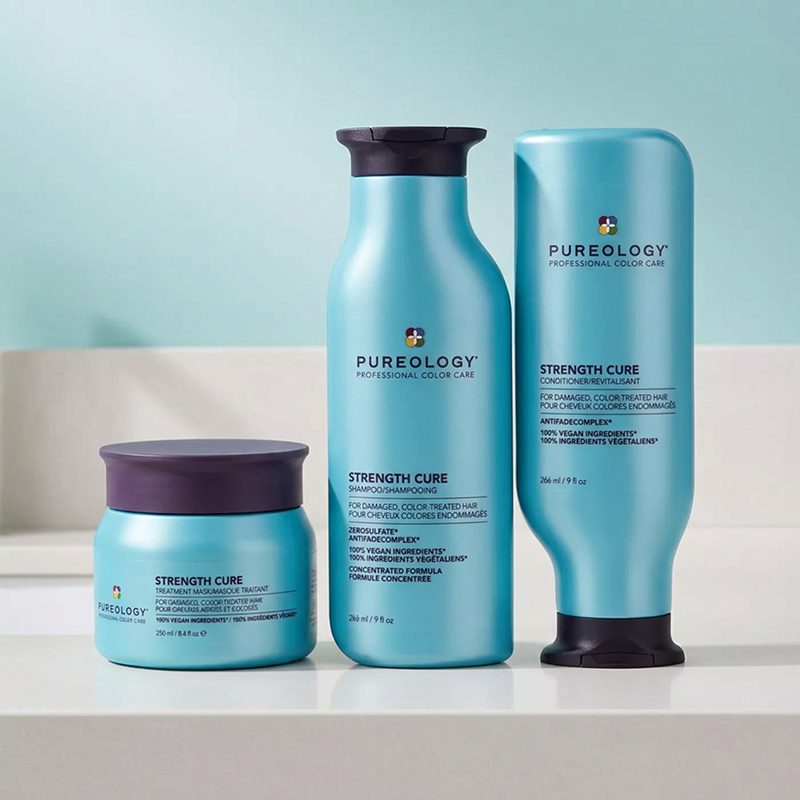
The Pureology Strength Cure system is a gentle, sulfate-free option formulated for damaged, color-treated hair. The formulas are designed to fortify strands from root to tip while also helping to maintain color vibrancy with Pureology's patented Antifade Complex®. The Superfood Treatment Mask offers an extra dose of care for hair that needs it.
Key Ingredients:1. Cleanse with the shampoo and rinse.
2. Apply the conditioner or, for a weekly deep treatment, apply the Superfood Treatment Mask.
3. Leave the conditioner or mask on for 3-5 minutes and rinse.
How It Can Help
This system offers a gentle approach to strengthening color-treated hair. Its formulation helps fortify the hair fiber while supporting color that looks vibrant rather than faded or dull.
| Product | Suited For | Key Benefit | Texture |
|---|---|---|---|
| Redken Extreme System | Distressed, mechanically damaged hair | Helps fortify weakened areas | Creamy lotion |
| Pureology Strength Cure System | Damaged, color-treated hair | Gentle strengthening and help maintaining color vibrancy | Rich cream |
Your Protein Treatment Questions, Answered
Protein treatments can raise plenty of questions, especially if you are trying one for the first time. The answers below explain how often to use them, how protein differs from moisture, and how to choose an approach that suits your hair.
How often should you do a protein treatment on your hair?
The frequency depends on your hair's condition and the type of product. For daily maintenance, shampoos and conditioners with small amounts of protein, like the Pureology Strength Cure system, are suitable. More intensive masks or treatments should typically be used weekly, bi-weekly, or monthly. Always follow the product's specific instructions.
Can you use too much protein on your hair?
Using protein treatments more frequently than the hair needs may contribute to protein overload, which can leave strands feeling brittle, stiff, or more prone to snapping. Balancing protein with moisture and monitoring how the hair responds can help determine whether to continue, reduce, or pause protein use.
What is the difference between a protein and a moisture treatment?
Protein treatments focus on structure and may help reinforce the hair’s cuticle. Moisture treatments focus on softness and elasticity, using humectants and oils to hydrate dry-feeling hair. Hair that feels limp or overly soft may respond to protein, while hair that feels brittle or rough may respond to moisture.
Can Protein Treatments Repair Hair Permanently?
Protein treatments cannot make hair grow faster, reverse hair loss, or permanently repair split ends. They may help reduce breakage so existing length is easier to retain, but split ends still require trimming. Persistent shedding, scalp-related hair loss, or thinning warrants evaluation by a dermatologist or qualified trichologist.
Can I use protein treatment on fine hair?
Yes, fine hair can benefit from protein as it can help give the hair more structure and body. However, fine hair can also be weighed down easily. Opt for lightweight formulas and start using them less frequently to see how your hair responds before making them a regular part of your routine.
Should I do a protein treatment before or after coloring my hair?
Using a strengthening system like Redken Extreme in the weeks leading up to a color service may help prepare the hair. After coloring, a gentle, color-safe strengthening system like Pureology Strength Cure may support the hair’s condition. An intensive treatment immediately before a service may be appropriate when suggested by a stylist.
Does curly hair need protein?
Many curly hair types need protein to help support their curl pattern. If curls are dropping, looking limp, or not clumping as usual, it may be a sign that they need a protein treatment to help reinforce their structure. As with all hair types, it's about finding the right protein-moisture balance for your specific curls.
Protein vs. Moisture: Which Does Your Hair Need?
Protein treatments may help address damage and reinforce the hair's structure. Consider the hair’s condition, distinguish signs that may point to a need for protein from signs of dryness, and select a formula designed for the relevant hair type and concern.
For additional information on caring for damaged ends, read the guide on how to address split ends.
Product selections are made using editorial research and brand knowledge; personal use or testimonials are noted where applicable


