


How Do You Detangle Hair Without Breakage?
Detangling hair shouldn’t hurt—nor should it leave you with more breakage than you started. Whether you’re dealing with a few end knots or dense, matted tangles, using the right technique is key to keeping your strands strong and healthy.
Key Insights / TL;DRTo detangle hair without breakage, start with damp hair, apply a leave-in conditioner or detangling spray, divide hair into sections, loosen knots with your fingers or a wide-tooth comb, and always work from the ends up. Take extra care with curly, coily, damaged, or matted hair—small sections and lots of slip matter most.
Key Takeaways:- Detangle damp—never bone dry—strands, using conditioner or detangling product for slip.
- Always work in manageable sections, using fingers or a wide-tooth comb to separate knots gently.
- Begin at the ends and move upward to reduce tension and avoid breakage.
- Products to try: Pureology Color Fanatic Spray, Mizani Miracle Milk.
Tangles are a fact of life—especially if your hair is textured, dry, or exposed to wind and friction. When strands catch and twist around one another, knots form, and tugging through them often results in breakage and split ends.
But detangling doesn’t have to spell damage. Instead of yanking through snags, a controlled, methodical approach—using the right moisture, tools, and steps—can keep your hair healthier and easier to manage day-to-day.
Understanding what causes strands to catch in the first place is your starting point for building a routine that’s gentler, smoother, and may help minimize breakage.
What Causes Hair to Tangle and Break?
Tangles occur when your hair’s protective outer layer—the cuticle—becomes lifted or rough, causing strands to snag on one another instead of gliding smoothly. This is especially common in hair that’s dry, damaged, or naturally curly or coily, as these textures are more prone to cuticle disruption.
Trying to force a comb or brush through a knot can put extreme stress on the hair shaft, leading to painful breakage and split ends. Everyday factors like harsh brushing, frequent heat styling, or friction from hats and pillowcases only amplify these risks by increasing mechanical damage and static.
To combat tangling and breakage, focus on reducing friction and adding moisture. Opt for conditioning, slip-enhancing formulas and handle your hair with care—especially between washes. Every hair type is different, so customizing your detangling routine is key for healthy, resilient strands.
Which Detangling Product Is Helpful for Your Hair Type?
Different concerns require different products, but slip and protection are highly recommended. Here’s what to try:
Leave-In Conditioner for Everyday Tangles: Mizani 25 Miracle Milk Leave-In Conditioner
A lightweight leave-in that suits all textures, this treatment is formulated with coconut and fennel seed oils and helps with easy glide and less tugging. Spray on damp hair, comb through, then style. The formula smooths cuticles and adds slip—which can be very helpful for gentle detangling.
Detangling Spray for Color-Treated Hair: Pureology Color Fanatic Multi-Tasking Leave-In Spray
Color can make hair drier and more tangle-prone. Pureology’s leave-in delivers 21 benefits including detangling, heat protection, and shine. Formulated with camelina, coconut, and olive oils, plus the AntiFade Complex, it helps replenish vibrancy while making comb-through safer and smoother. Spray onto clean, damp hair; distribute and style as usual.
What Type of Hair Tangle Do You Have?
Not every tangle is created equal:
- Light knots: Usually at the ends; need moisture and finger-detangling.
- Recurring snags: Mid-length tangles that keep coming back—work in smaller sections with extra product.
- Dense or matted areas: Severe, compacted knots demand patience, heavy slip, and sectioning; never force them apart.
How to Detangle Hair in 5 Steps
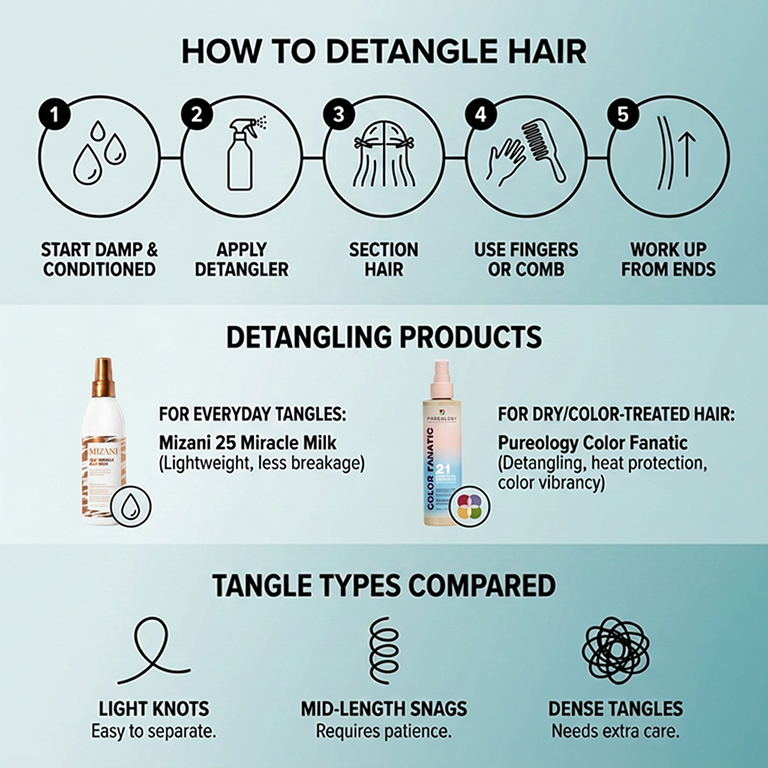
A methodical approach may help prevent breakage across all textures—straight, wavy, curly, or coily. Focusing on detangling textured and 4C hair to minimize breakage means working in smaller sections, prioritizing lots of slip, and always starting from the ends up to avoid unnecessary tension.
Step 1: Start With Damp, Conditioned Hair
Detangle after conditioning in the shower, or mist dry hair lightly, then apply a leave-in. Dry hair breaks more easily.
Step 2: Apply a Detangling Product
Saturate mid-lengths and ends with a leave-in conditioner or spray. Let it sit to create slip and break down knots with less force.
Step 3: Section Your Hair
Divide hair into four (or more) manageable pieces. Use clips to keep sections out of the way for focused care that helps reduce tangles.
Step 4: Use Your Fingers or a Wide-Tooth Comb
Gently detangle with the proper brush or comb, then, use a wide-tooth comb to minimize pulling—which can be very helpful for fragile, coily, or curly types.
Step 5: Start From the Ends and Work Up
Always start at the ends, holding the section to avoid tugging at roots. Move upward gradually so knots loosen in layers, reducing tension and helping to minimize breakage.
FAQ - Detangling Questions Answered
Detangling can bring up plenty of questions: When should you do it? Which tools are best? How often is enough? Below, we answer the most common concerns to help you create a smooth, breakage-minimizing routine.
Should you detangle hair wet or dry?
It depends:
- Fine hair: Slightly damp detangling minimizes stretching and snapping.
- Curly/coily hair: Wet, with conditioner, can offer optimal slip.
- Damaged hair: Damp detangling is generally safest. Always follow your product’s directions.
What tools can be used for detangling hair?
- Fingers and wide-tooth combs can be highly effective for fragile, curly, or textured hair.
- A flexible-bristle detangling brush suits longer or straight hair after major knots are removed.
- Fine-tooth combs should only be used to finish, never to start detangling.
How often should you detangle your hair?
It varies—do it on wash days, or as needed if knots develop quickly. Always detangle slowly and with plenty of product to limit breakage.
Can you use oil to detangle hair?
Hair oil can help with light knots by softening and adding slip, but may not offer the same lubricating power as proper detangling sprays or conditioners. Use sparingly and according to your hair’s needs.
Is it normal for hair to tangle easily?
Length, texture, dryness, and friction (from sleeping, hats, or wind) all play a role. Regular trims, moisture, and protective styles help prevent tangling.
How do you detangle matted hair?
Apply a rich conditioner or detangling spray and divide the mat into tiny sections. Loosen gently with fingers at the edges before combing—never rip through a dense knot. If severely matted, consult a professional stylist.
Build a Gentler Detangling Routine for Fewer Knots and Less Breakage
Detangling is about preparation, not speed. Choosing the right combination of moisture, product, and tool limits tension on your cuticle—which may help your hair stay strong, smooth, and beautiful between every wash.
Ready to go further? Explore our guides on moisturizing, heat styling, and protecting your unique hair type to cut down on future knots and enhance shine.
Product selections are made using editorial research and brand knowledge; personal use or testimonials are noted where applicable.


