


TL;DR: Hair porosity is a key factor in determining which products will give you your healthiest, best-looking hair. Low porosity hair is often supported by lightweight, water-based hydration. High porosity hair may benefit from richer creams, masks, and sealing oils. Medium porosity hair often responds well to balanced, maintenance-focused routines. Matching your hair’s porosity makes all the difference for moisture, color protection, and frizz management.
Key Takeaways
- Low porosity hair usually needs lightweight, water-based products to avoid buildup.
- High porosity hair needs rich masks, sealing oils, and color-protection support to reduce moisture loss and frizz.
- Medium porosity hair is the most versatile and benefits from balanced care.
- Simple tests (float, spray, slip) can help you identify your porosity at home.
- Hair porosity impacts more than moisture—it also affects coloring, heat styling, and damage repair outcomes.
Ever tried an amazing hair mask or oil that worked wonders for a friend but left your own hair limp, greasy, or dry? The difference could come down to hair porosity, which determines whether a formula absorbs, sits on the surface, or disappears too quickly to make a lasting difference. Understanding your porosity can help guide product choices that support color retention and contribute to healthier-looking hair.
And if you already know your hair’s porosity and are looking for product recommendations, you’re in the right place. Here are some picks tailored to low, medium, and high porosity hair to help you build a routine that meets your hair’s unique needs.
Products for Low Porosity Hair (Lightweight Hydration):
- Biolage Hydra Source Moisture Method Scalp & Hair Serum
- Redken Acidic Bonding Concentrate 24/7 Night & Day Serum
Products for High Porosity Hair (Balance Maintenance):
- Matrix Food for Soft Rich Hydrating Treatment Mask
- Pureology Hydrate Mask
- Mizani Moisture Fusion Mask
Products for Medium Porosity Hair (Deep Moisture & Sealing):
- Matrix Food for Soft Hydrating Shampoo + Conditioner
- Pureology Hydrate Shampoo + Conditioner
- Redken One United
The Science Behind Hair Porosity and the Cuticle Layer
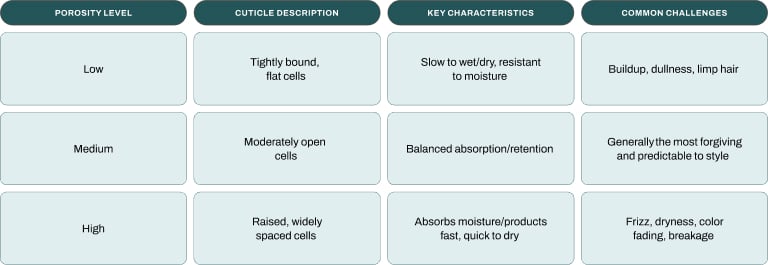
Hair porosity describes how easily moisture, oils, and conditioners move through the cuticle, the outermost layer of each hair strand. The more lifted or open the cuticle, the quicker both moisture and products can pass in and out, meaning you might absorb deep conditioners fast but struggle to hold onto their benefits.
- Low porosity: Cuticle layer is tightly packed, making it harder for moisture and products to penetrate.
- Medium porosity: Cuticle is moderately open, allowing balanced absorption and moisture retention.
- High porosity: Cuticle is lifted or damaged, readily absorbing moisture and product, but also losing it quickly.
Why Hair Porosity Changes How Products Perform
Hair product success is all about the cuticle and how it influences moisture movement, making porosity a key factor in formula-matching. If it’s tightly bound (low porosity), even the richest conditioner might never get inside. If it’s too open or raised (high porosity), you may love rich creams and oils—but still feel dry hours after washing because moisture escapes too fast.
How to Identify Your Porosity Before Choosing Products
Wondering how to figure out your porosity? Try one or more of these at-home tests. Keep in mind, these methods are meant to be directional—not diagnostic—so use them as helpful guides rather than absolute measures.
- The Float Test: Place a clean shed strand in a glass of water. If it floats after several minutes, you likely have low porosity; if it sinks quickly, your hair is probably high porosity; somewhere in the middle suggests medium porosity.
- The Spray Test: Mist clean hair with water. If droplets bead up rather than absorb, that points to low porosity; if hair soaks up water immediately, it’s likely high porosity.
- The Slip Test: Pinch an end of a strand and slide your fingers up to the root. Smooth feel = low porosity; bumpy/rough feel = higher porosity and lifted cuticles (especially towards damaged or colored ends). Remember, porosity can vary from roots to ends, especially if you color, heat-style, or chemically treat your hair.
Match Your Product Routine to Low, Medium, or High Porosity Hair
Porosity turns product shopping into a formula-matching exercise: match the product weight, texture, and ingredient type to how quickly your hair absorbs or loses moisture.
-
Low Porosity Hair:
- What Helps: Lightweight leave-ins, water-based serums, and clear, rinse-out conditioners that don’t build up.
- What to Avoid: Heavy oils, thick butters, and over-layering products—they can sit on top and cause greasiness or dullness.
- Tips: Clarify regularly, and use gentle heat during deep conditioning to help moisture penetrate.
-
Medium Porosity Hair:
- What Helps: Balanced shampoos, conditioners, and occasional protein/moisture treatments to maintain manageability and elasticity.
- What to Avoid: Overdoing protein or silicone-heavy products, which can shift balance.
- Tips: Maintain with regular, balanced care and periodic treatments to adjust with the seasons.
-
High Porosity Hair:
- What Helps: Rich masks, creams, sealing oils, and leave-ins to fill gaps and seal in moisture. Color-protecting and repairing formulas are crucial, especially for chemically treated hair.
- What to Avoid: Skipping sealing steps—moisture will escape and lead to frizz or roughness.
- Tips: LOC or LCO methods (liquid, oil, cream / liquid, cream, oil) help build longer-lasting moisture. Always protect hair from heat and UV if color-treated or porous.
Ingredient choices matter, too. Humectants like glycerin or aloe vera help draw water into the hair, making them excellent for boosting moisture. Occlusives such as oils or butters are best for slowing water loss, especially in high porosity hair where frizz, color fading, and breakage are concerns. Ultimately, the best choice depends on whether your main challenge is absorption, buildup, dryness, frizz, fading, or breakage.
Matching products to your porosity can help support hydration and a healthy appearance for your hair, regardless of its texture or your routine.

How Porosity Impacts Coloring, Damage, and Long-Term Hair Health
Porosity also influences chemical treatments and damage recovery. High porosity hair absorbs color rapidly but fades faster, and is more susceptible to damage from heat or bleaching. Low porosity hair can be more resistant to color or deep conditioning, but stays healthier with regular clarifying and gentle heat for product penetration.
For major color changes, ask a professional colorist how your porosity may affect processing time, color retention, and aftercare.
Your Hair Porosity Questions, Answered
What are the signs of high porosity hair without testing?
Hair that absorbs water fast, dries quickly, frizzes easily, feels rough, or fades quickly after color may be high porosity.
What are the signs of low porosity hair without testing?
Hair that takes a long time to get wet, dries slowly, resists color, or gets buildup easily may be low porosity.
How do you moisturize low porosity hair without buildup?
Choose lightweight leave-ins and avoid repeated layering of heavy oils. Use heat with deep conditioners to encourage absorption and clarify regularly.
How do you seal moisture into high porosity hair?
Apply hydrating products first, then follow with cream or oil to lock in moisture. This is the foundation of LOC/LCO routines.
The Bottom Line
Understanding your hair porosity turns haircare from guesswork into a streamlined, effective routine. Whether you’re fighting frizz, chasing lasting color, or just aiming for soft, hydrated hair, letting porosity guide your product choices means healthier, more beautiful hair—on your terms.
Product selections are made using editorial research and brand knowledge; personal use or testimonials are noted where applicable


