


If you’ve already trimmed your split ends, the next question is how to keep them from coming right back. Split ends can’t be permanently repaired once the strand has frayed, but the right prevention routine can help reduce the heat, friction, dryness, and breakage that cause new splits to form. Prevention can work by adopting a gentle hair care routine, minimizing heat styling, and keeping your hair properly hydrated.
Key Takeaways:
- Hair is most fragile when wet, so gentle detangling with a wide-tooth comb is crucial.
- Frequent heat styling without a heat protectant is a leading cause of cuticle damage.
- Regular trims every 6-8 weeks are a direct way to remove frayed ends before they can split further up the hair shaft.
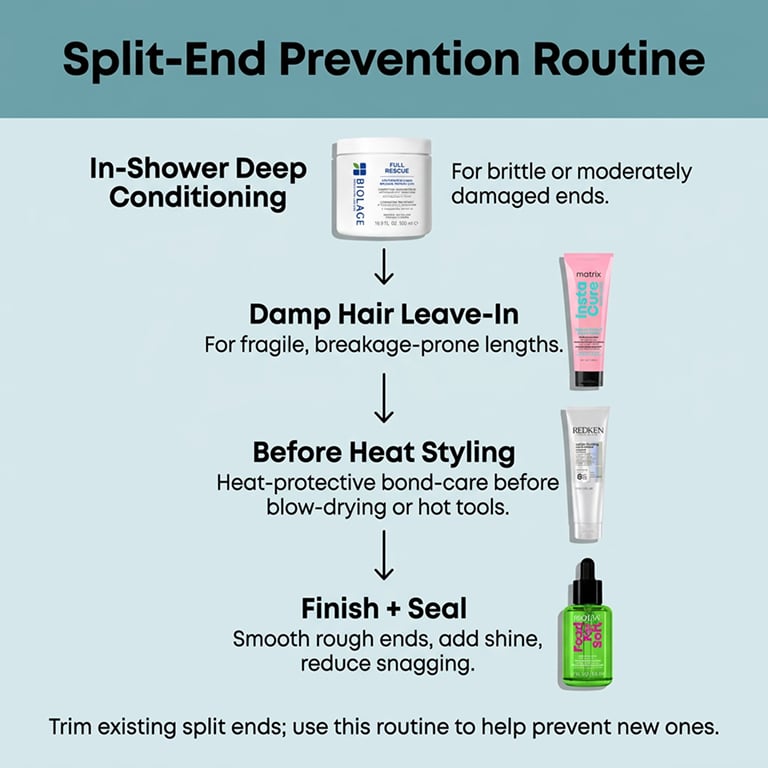
- Products to use in your routine can include hair oil, deep conditioning masks, heat-protective bond-care, and a leave-in hair mask.
Split ends, also called trichoptilosis, occur when the protective outer layer of your hair shaft (the cuticle) wears away and the strand begins to fray. They’re a classic sign of damaged hair, making the ends look thinner, rougher, and disruptively dull—even if your hair is still growing. Once split ends appear, they can’t be permanently fused together, making prevention your most powerful strategy. By understanding what causes hair splitting—think heat, rough handling, chemical processes, and dryness—you can tailor your routine to protect your lengths before visible damage starts.
If your ends are already visibly split, start with learning how to get rid of split ends. If you’re trying to prevent new fraying after a trim, these optional routines are for you.
Why Does Your Hair Keep Getting Split Ends, Even After a Haircut?
Split ends are the result of a repeating damage cycle: your hair experiences stress, the cuticle weakens, and the unprotected inner strand is left exposed—making it prone to fray, snap, or split. Triggers for this cycle include rough detangling, towel friction, tight hairstyles, heat styling, chemical services, dryness, and even daily friction from pillowcases, collars, and brushes (classic causes of hair shaft splitting and frayed hair ends). The tips of your hair are particularly at risk since they’re the oldest part—exposed to years of styling, washing, and environmental stress.
That’s why split ends can seem to come back just weeks after a trim. If your hair habits stay the same, new splits will form. Your hair type also matters: curly and coily hair is inherently more prone to dryness, while color-treated or chemically processed hair often features weakened cuticles, and fine hair may be more vulnerable to breakage under tension or high heat.
Mechanical Stress and Daily Habits
Everyday habits can contribute more to split ends than you might realize. For instance, aggressively brushing through tangles can stretch and snap hair fibers, while towel-drying with a rough towel or sleeping on a cotton pillowcase creates friction that lifts and damages the cuticle. Tight hairstyles create constant pressure that, over time, can cause hair breakage and even broken hair ends. Even seemingly harmless acts, like pulling hair back with elastic bands or wearing hats, can stress the tips if done repeatedly.
Heat and Chemical Damage
Excess heat or repeated chemical processing weakens the protein bonds and cuticle layer—the core defenses against split ends and damaged hair tips. Blow-drying on high heat, using styling irons without protectant, bleaching, relaxing, or frequent coloring all make the strand more vulnerable to splitting. Over time, these stressors can transform smooth, strong hair into a network of brittle hair ends and split, frayed tips.
Read here to discover the key signs of damaged hair and how to spot them before they lead to split ends.
How Do You Stop Split Ends From Coming Back?
Stopping split ends starts with a proactive hair care routine that targets high-risk moments: shampooing, detangling, drying, styling, and sleeping. Since frayed hair ends can’t be “glued” back together, your goal is to avoid exposing the strand’s cuticle to conditions that cause stress and breakage.
This means building a maintenance routine around gentle cleansing, regular conditioning, careful detangling, heat protection, and consistent trims. Each step helps to reduce friction, maintain moisture, and reinforce the hair’s natural defenses against future hair breakage.
Step 1: Cleanse Gently and Condition Your Ends
Begin with a mild, sulfate-free shampoo that removes buildup without stripping hair of its natural oils. Every wash, follow up with conditioner on the mid-lengths and ends—these areas are the oldest and most prone to split ends. The slip of conditioner helps detangle easily, reducing breakage.
For hair that feels especially rough, dry, or isn’t bouncing back, introduce a deep conditioning mask weekly. This provides moisture and lipids to improve the appearance of brittleness and fortify the hair shaft, promoting a softer, more flexible appearance. Masks are an essential split end treatment in any prevention routine.
Step 2: Style With Heat Protection in Mind
You don’t have to quit heat styling, but intentional use is crucial. Always apply a heat protectant before reaching for a blow dryer or straightener, and use the lowest effective temperature for your hair type. Air-drying hair about 80% before heat styling reduces direct exposure. Avoid hot tools on wet or damp hair unless specifically designed for that use; re-passing the same section with heat increases the risk of hair splitting.
Finish with a lightweight oil or serum on your ends—this smooths roughness, adds shine, and creates a barrier against additional friction and dryness.
Can You Get Blowout Without Causing Split Ends?
It’s possible! After air-drying hair most of the way, apply a heat protectant and use your dryer on a low/medium setting. Keep the nozzle moving—don’t hold heat in one spot. Guide the airflow along the hair shaft to coax the cuticle smooth. Limit the number of passes with round brushes or airwrap tools to minimize snagging and friction. Finish with a drop of serum on the tips for a smooth, frizz-free look.
For more tips, read here to learn about the best Haircuts for split ends and how they can help keep your ends healthy.
What Products Can Improve the Appearance of Damaged Ends?
No product can “heal” a split end permanently, but targeted treatments can make a visible difference and help prevent future splits. Here’s how to match the right product type with your specific hair concern:
| If your hair feels… | Use this type of product | Product Option | How It Works |
|---|---|---|---|
| Rough or dry at the ends | Oil/serum | Matrix Food for Soft Multi-Use Hair Oil Serum | Avocado oil and conditioning agents reduce friction between fibers, smoothing the cuticle and minimizing snagging. Formulated to provide 7x more moisture for up to 72 hours.* |
| Brittle or moderately damaged | Deep conditioning mask | Biolage Full Rescue Restorative Mask | Lipids and moisture-binding ingredients improve flexibility, reducing brittleness and frayed hair ends. Formulated to provide 71% more hydration after one use compared to non-conditioning shampoo.** |
| Heat-styled or chemically processed | Heat-protective bond-care leave-in | Redken Acidic Bonding Concentrate Leave-In Treatment | Citric acid and bond-building tech reinforce weakened fibers. Shown to create an 88% visual improvement in the appearance of split ends.*** |
| Fragile or breakage-prone | Leave-in bond-care mask | Matrix Instacure Build-A-Bond Mighty Care Leave-In Mask | Bond-building technologies strengthen weak spots, reducing breakage from brushing or styling. Can leave hair appearing up to 8x stronger and 94% smoother.**** |
*When used as a system of Food For Soft Shampoo, Conditioner, or Mask & Oil vs non-conditioning shampoo.
**Full Rescue Mask vs. non-conditioning shampoo.
*** Based on consumer test results.
**** System of Instacure Build-A-Bond Shampoo, Conditioner, Mask & Balm vs non-conditioning shampoo.
Is it better to brush hair wet or dry?
Wet hair is at its most vulnerable; brushing it aggressively can stretch and snap the strands, especially at the ends. It’s best to use a wide-tooth comb to gently detangle wet hair, starting from the tips and working up to the roots. This method helps prevent hair shaft splitting.
Can sleeping with your hair down cause split ends?
Tossing and turning on a cotton pillowcase can create friction that lifts the hair cuticle, contributing to broken hair ends and split tips. To reduce this, try sleeping with hair in a loose braid or bun, and switch to a satin or silk pillowcase for extra slip and less stress on your ends.
Focusing On Split End Prevention
Managing split ends is all about defense. By minimizing heat, handling your hair gently, nourishing your lengths, and scheduling regular trims, you help your hair stay strong, smooth, and visibly healthy—no more dry ends or fraying compromising your style.
Ready to take the next step for your healthiest hair? Discover more on deep conditioning treatments and building a routine for your hair type. Your ends will thank you.
Product selections are made using editorial research and brand knowledge; personal use or testimonials are noted where applicable.


