


How to Care for Color-Treated Hair and Prevent Fading
Key Insights / TL;DR:- Wait 48–72 hours before your first post-color wash unless your stylist suggests otherwise.
- Wash color-treated hair only two to three times a week with cool or lukewarm water.
- Always use color-safe, sulfate-free products and condition regularly.
- Protect from heat, UV rays, chlorine, and saltwater to slow fading and dryness.
- Color-treated hair’s increased porosity makes it more prone to moisture loss—sulfate-free shampoos offer gentler cleansing for color longevity.
- Using cool water and reducing wash frequency helps keep color fresh and vibrant longer.
- Deep conditioning and heat protection nourish hair while defending against styling and environmental damage.
Coloring your hair is a transformative, confidence-boosting act of self-expression—but it changes hair’s structure, leaving the cuticle more open and prone to moisture loss. This means color-treated strands may become dry and lose vibrancy if not cared for properly.
The good news? With a few simple tweaks—like gentle washing routines, consistent conditioning, and the right products—you can maintain luminous color and strong, healthy-looking hair between appointments.
Ready to protect your shade and keep your color looking salon-fresh? Here’s your expert-backed playbook for caring for color-treated hair.
How Should You Wash Color-Treated Hair?
Your wash routine impacts how long your color lasts. Hot water and some shampoos can contribute to color and moisture loss, while gentler habits help prevent color fade and keep hair shiny.
Wait 48–72 Hours Before Your First Wash
Hold off on washing your hair for two to three days after a color appointment (unless your stylist says otherwise). This gives color time to settle into the hair shaft and prevents premature fade. Afterward, resume a gentle, color-safe cleansing routine.
Wash Less Frequently With Cool Water
Washing two or three times a week with lukewarm or cool water helps maintain your tone. Hot water can cause the hair cuticle to swell, which may allow pigment to escape faster. On non-wash days, refresh with a dry shampoo (like Pureology Style + Protect Refresh & Go Dry Shampoo) to soak up oil and preserve your color.
Choose a Sulfate-Free, Color-Safe Shampoo
Regular shampoos—especially those with sulfates—can strip pigment and natural oils. Always choose color-safe, sulfate-free formulas like L’Oréal Professionnel Vitamino Color Shampoo for gentle cleansing and to keep hair soft and vibrant.
Need more expert secrets for keeping your shade vibrant and strong? Don’t miss our in-depth Pro Tips to Care for Color-Treated Hair for next-level maintenance advice straight from colorists.
How to Keep Color-Treated Hair Hydrated and Protected
Moisture is key to healthy, long-lasting color. Alongside deep conditioning, protecting hair from heat and UV exposure keeps it strong and vibrant.
Deep Condition Regularly
Color-treated hair’s increased porosity means it loses moisture faster. Use a rich mask or deep conditioner weekly, which is formulated to support hydration, boost shine, and improve manageability between appointments. Consider options like Shu Uemura Art of Hair Urban Moisture Hydro-Nourishing Hair Mask.
Protect From Heat and UV Damage
Blow-dryers, flat irons, and curling wands—without protection—increase color fade and dryness. Always prep with a heat-protectant spray like Pureology Color Fanatic Multi-Tasking Leave-In Spray. For extended sun exposure, use a UV-protectant product or a hat. Rinse hair before and after swimming to protect color from chlorine and saltwater.
Why Is Color-Treated Hair Fading, Dry, Brassy, or Uneven?
Even with a diligent routine, color-treated hair can develop common challenges like fading, dryness, unwanted tones, or uneven results. The symptoms below help you pinpoint what’s going wrong—so you can act fast and know when to seek expert help.
Hair Color Is Fading Quickly
Color fading ahead of schedule? Start by rethinking your habits. Washing hair too often, using hot water, or applying harsh shampoos are top culprits. Instead, limit washes to two or three times weekly, use cool or lukewarm water, and always opt for a sulfate-free, color-safe shampoo. Be sure to minimize extended UV or heat exposure, which also accelerates fading.
Hair Feels Dry, Brittle, Gummy, or Prone to Breakage
After coloring, hair can feel rough, dehydrated, or fragile. If this happens, pause additional chemical services and heated styling tools. Focus on moisture-rich conditioners or masks. If strands feel stretchy, mushy, or weak, your hair may benefit from protein or bond-repair treatments—but don’t stack multiple treatments at once. Severe breakage or sudden texture shifts are a sign to consult a professional right away.
Blonde or Brunette Color Is Turning Brassy
Brassy yellow or orange tones are a frequent frustration. Choose a toning product tailored to your hue: purple shampoo for unwanted yellow in blondes, blue for orange in brunettes. Follow package directions and avoid overuse, which can make hair look dull or overly ashy. Persistent brassiness should be addressed with a pro colorist.
Hair Develops a Green Tone After Swimming or Hard Water
If you notice greenish hues—especially after swimming—rinse hair immediately and reach for a clarifying or mineral-removing treatment (always as directed). Because corrective steps can vary, don’t hesitate to ask your stylist for advice, especially if your hair already feels delicate.
Roots Are Growing In Between Appointments
Visible roots can break up your look. Tackle regrowth with a temporary root touch-up spray or powder until your next color appointment. For significant root or shade changes, or overlapping previously colored hair, leave it to the pros to avoid uneven or damaging results.
At-Home Color Looks Too Dark or Uneven
Don’t panic—or try to correct with another boxed dye or bleach. Layering color can amplify dryness and lead to breakage. If the outcome is much darker or patchy, or if your hair feels compromised, reach out to a professional colorist for a tailored treatment plan that protects your hair’s health and appearance.
Want to stay ahead of color challenges and keep your look on trend? Explore the 2026 Hair Trends for Color Maintenance for the latest innovations and stylist-loved pro routines to keep your color looking salon-fresh well into the new year.
Which Products Support a Color-Treated Hair Routine?
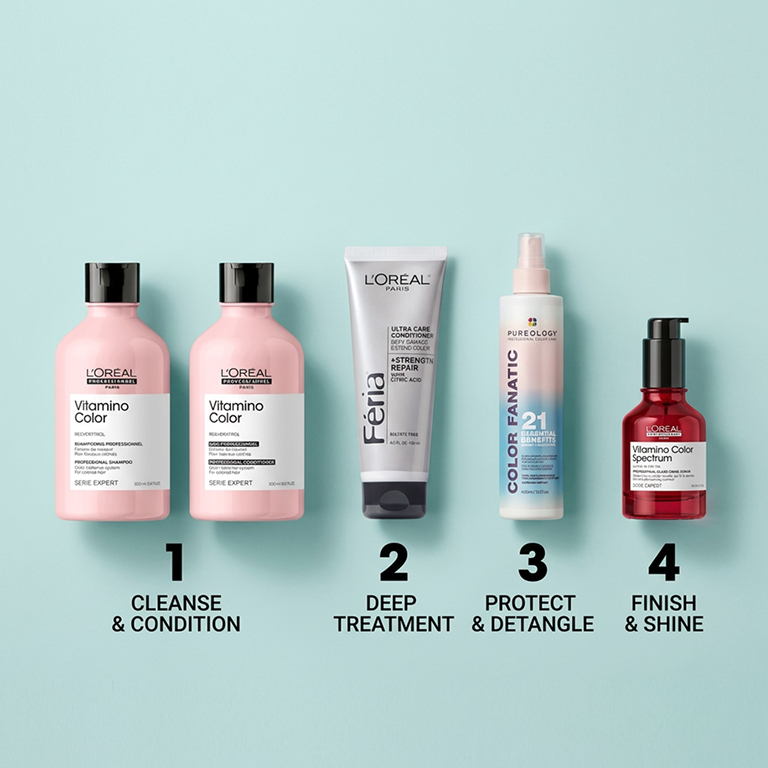
The right products make all the difference in caring for color-treated hair. Formulas designed specifically for dyed hair help tackle dryness, dullness, color fading, and unwanted tones. Building a supportive routine—starting with gentle cleansing and ending with a shine-boosting finish—will help you enjoy vibrant color and healthier-looking hair longer.
Below, explore a step-by-step regimen with trusted, stylist-loved products:
Cleanse and Condition With L'Oréal Professionnel Vitamino Color Shampoo and Conditioner
If you want to maintain color vibrancy, boost shine, and support overall hair health, start here. The L'Oréal Professionnel Vitamino Color system uses a gentle, sulfate-free formula intended to cleanse while helping to protect color. The matching conditioner hydrates strands and smooths the cuticle, which helps leave hair feeling softer and more manageable.
Ideal For: All color-treated hair types, especially if you want to preserve vibrancy and protect the hair fiber from daily stressors.
Add Targeted Conditioning With L'Oréal Strength Repair Ultra Care Conditioner For Color-treated Hair
Color processes can leave hair feeling especially dry or fragile. For an extra boost, alternate or swap in the Ultra Care Conditioner + Strength Repair. This enriched conditioner is formulated to target weakened strands, provide moisture, and help improve manageability. For best results, use after shampooing and alongside your weekly deep-conditioning mask.
Ideal For: Anyone with color-treated hair that’s prone to dryness, feels stressed, or needs added support for softness and strength.
Protect and Prep With Pureology Color Fanatic Multi-Tasking Leave-In Spray
Styling protection is just as important as the basics. This lightweight, multi-benefit leave-in spray is designed to detangle, condition, and help shield hair before heat styling. It also helps maintain color vibrancy and guard against environmental factors like UV rays. Simply spray on damp hair to prime and protect, smoothing the way for blow-dryers, irons, and other tools.
Ideal For: Anyone looking for a one-step solution to detangle, add moisture, and prime hair before styling—while safeguarding color.
Finish With L'Oréal Professionnel Vitamino Color Spectrum Glass Shine Serum
Every great color-care routine ends with a finishing touch. This heat-activated, waterless serum is formulated to promote a smooth, shiny appearance while helping defend strands from frizz, humidity, and heat damage. Use it as the last step in your regimen for polished, light-reflecting color and a salon-sleek finish.
Ideal For: Those who want to lock in shine, reduce frizz, and add a layer of heat protection—especially for color-treated hair exposed to routine heat styling.
FAQ - Color-Treated Hair Questions Answered
How soon can I wash my hair after coloring?
Wait 48–72 hours to let color settle unless your colorist says otherwise.
Can I use regular shampoo on colored hair?
It's not recommended; sulfate-free, color-safe formulas are designed to be gentler and help support color vibrancy and moisture.
How can I keep my hair color from fading?
Wash less often with cool/lukewarm water, use color-safe products, avoid heat and UV exposure.
How do I address brassy tones in my hair?
Purple (yellow tones) or blue (orange tones) toning shampoos work, but don’t overuse. For stubborn brassiness, see a pro.
How often should I wash color-treated hair?
Ideally, 2–3 times per week, but adjust for scalp and hair type. Use dry shampoo as needed between washes.
Bring Your Color-Treated Hair Care Routine Together
Consistency is everything: wash less, use cool/lukewarm water, condition deeply and as needed, and always prep with heat/UV protection. If you notice serious damage, sudden texture changes, persistent odd tones, or major color issues, pause chemical services and consult a pro.
Ready for fresh inspiration? Check out our latest hair color trends before your next salon visit.
Product selections are made using editorial research and brand knowledge; personal use or testimonials are noted where applicable.


