


Key Takeaways
- For pre-sun protection: Apply a lightweight leave-in product to help support moisture, manageability, and color care before outdoor exposure.
- For color-treated hair: Sun protection should also focus on helping reduce visible color fade, brassiness, and dryness caused by UV exposure, salt water, and chlorine.
- For post-sun replenishment: use a strengthening shampoo, hydrating mask, or deep conditioner to help hair feel more nourished, softer, and easier to manage after sun, salt, chlorine, brushing, or styling.
While you may be diligent about sunscreen for skin, your hair and scalp face daily UV stress, too. Sun can weaken hair, strip moisture, and speed up color fade—leaving strands dry, dull, or fragile. The good news: protection is simple. A few consistent habits—covering hair and scalp, using lightweight UV-protective products, and replenishing after sun, salt, or chlorine—keep hair looking softer, shinier, and more manageable.
Ahead, find a simple block → coat → replenish guide for before, during, and after time outdoors.
What Does Sun Do to Hair?
Sun exposure affects the hair shaft in three main ways: it dries out the surface, weakens protein structure, and oxidizes pigment. Over time, that’s why sun-exposed hair can feel rougher and look less vibrant.
The sun’s UV rays can also disrupt the hair’s natural lipid layer—the protective coating that helps hair look smooth and shiny—leading to dryness and increased frizz. With repeated exposure, strands may become brittle and more prone to split ends.
UV light can act like a gentle bleach on pigment. Whether your hair is natural or color-treated, extended time in the sun can lighten your shade. If your hair is color-treated, you may also see faster fading or brassiness. Wind, salt water, and chlorine can intensify these effects.
What you might notice:
- Drier, rougher texture and more frizz
- Dullness and less shine
- Increased tangles, breakage, or split ends
- Lightening of natural color
- Faster fade or brassiness on color-treated hair
Key Effects of Sun Damage
Color Fading and Brassiness: UV rays act like a bleach on both natural and color-treated hair. They can break down pigment in the hair, causing salon color to fade faster, lose vibrancy, or shift brassy, especially on blonde, highlighted, red, or brunette color-treated hair.
Dryness and Brittleness: The sun's rays strip the natural lipids from the hair's surface, which act as a protective barrier. This allows moisture to escape, leaving the hair feeling dry, rough, and brittle.
Weakened Protein Structure: Hair is primarily made of a protein called keratin. Prolonged UV exposure can damage and weaken these keratin strands, leading to a loss of elasticity, increased split ends, and breakage.
How to Protect Hair from Sun Damage: Block, Coat, Repair
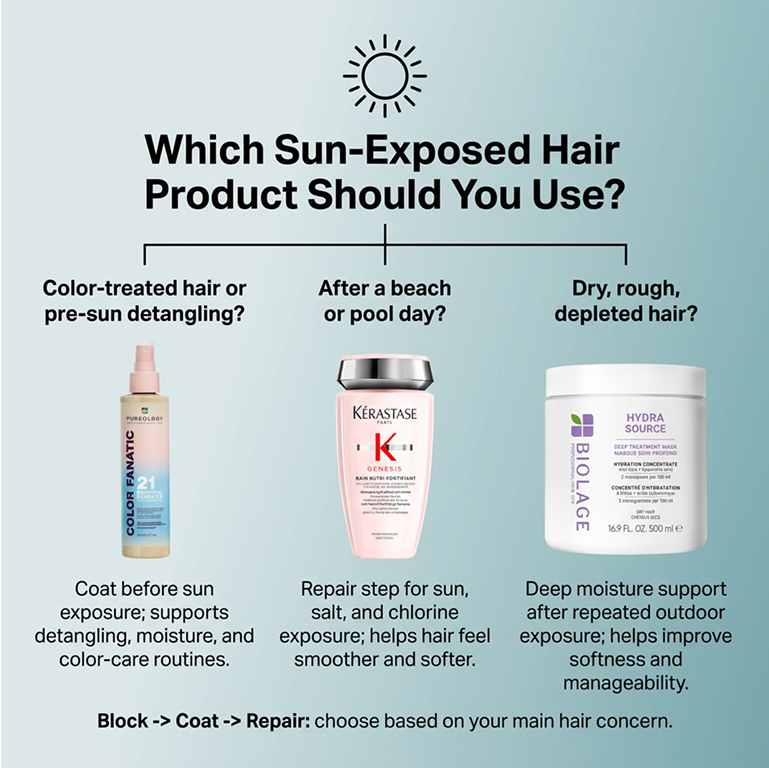
A smart hair sun-care routine has three simple jobs: block direct UV exposure, coat strands with lightweight protection, and replenish the look and feel of hair after sun, salt, or chlorine. Think of it as a repeatable summer routine rather than a one-time product step.
Block: Cover Hair and Protect the Scalp
One reliable way to help protect hair from sun damage is to physically block direct UV exposure. Wide-brimmed hats, scarves, UPF fabrics, protective styles, and shade can all help reduce how much sun reaches your strands.
Look for a lightweight hat with tight stitching (bonus points if it’s a UPF 30 fabric, which features built-in sun protection). A style with a wide brim can also protect the more delicate strands along your hairline. If hats aren’t really your thing, try a headscarf made of a breathable material like silk or satin.
Securing your hair into braids, a slicked-back bun, or with a claw clip can help reduce how much of your hair is actually exposed to direct sunlight. Try creating these styles without a part line to protect your scalp, too.
Protect your scalp by covering exposed areas like your part line and hairline. Use a scalp-friendly SPF or hair sunscreen rather than face or body sunscreen, and reapply as directed, especially during extended sun exposure.
Coat: Use UV-Protectant Hair Products and Reapply
The “coat” step is where UV-protective hair products come in. Lightweight sprays, mists, leave-ins, oils, and creams can help create a protective layer on the hair, especially through the mid-lengths and ends where dryness and color fade tend to show.
Apply before going outdoors, then reapply after swimming, sweating, brushing, toweling off, or spending several hours in the sun. If your hair is color-treated, look for formulas that support color care, moisture, and manageability without weighing hair down.
Replenish: Improve the Look and Feel After Sun Exposure
After-sun care can help hair look and feel better, even though structural UV damage cannot be truly reversed. Rinse hair after swimming in salt water or chlorine, then cleanse gently and follow with a hydrating conditioner or deep-conditioning mask. Once a week, follow up your cleansing routine with a nourishing hair mask to help revitalize and replenish your mane.
If hair feels brittle, add strengthening care as needed, trim split ends, and reduce heat styling while strands recover. The goal is softer, smoother, more manageable hair—not a promise to undo damage.
| What UV light can do to your hair | How it shows up | How to help defend against it |
|---|---|---|
| Breaks down the cuticle | Rough texture, frizz, tangles | Coat with a UV-protective leave-in or spray; block with a hat or scarf |
| Weakens protein structure | Brittleness, split ends, breakage | Use strengthening care, deep conditioning, and less heat styling |
| Strips moisture and lipids | Dry, straw-like strands | Rinse after sun, salt, or chlorine; follow with hydrating conditioner or mask |
| Oxidizes pigment | Color fade, brassiness, dullness | Use UV-protective, color-care formulas and cover hair during long exposure |
| Exposes scalp to direct sun | Part-line tenderness or visible irritation | Cover the part line or use a scalp-friendly SPF format; seek professional guidance for persistent concerns |
Products to Add to a Hair Sun-Protection Routine
For Heat Protection and Nourishing Prep:
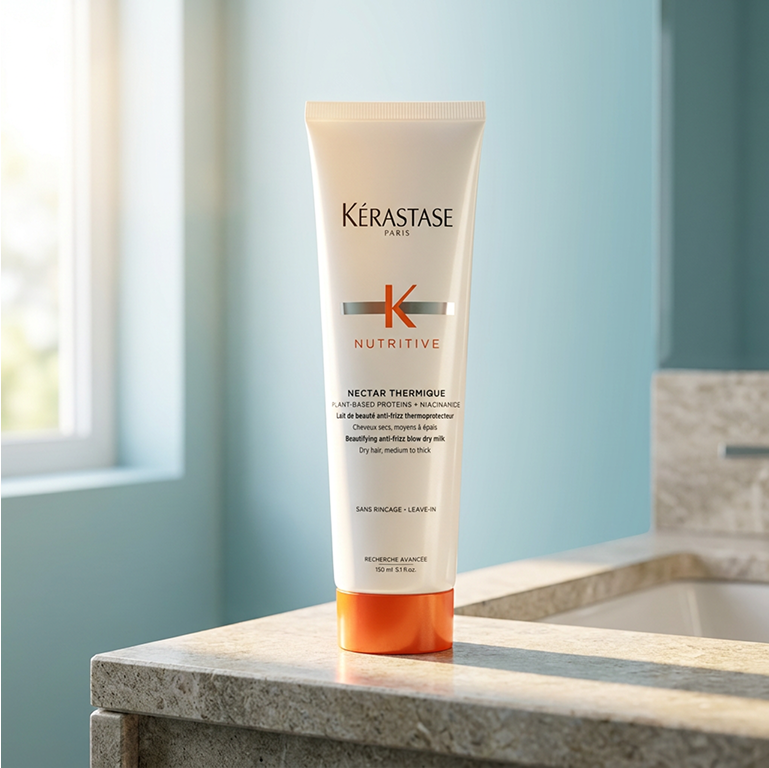
Kérastase Nutritive Nectar Thermique Heat Protecting Cream is a nourishing blow-dry primer for days you plan to style before or after time in the sun. Apply to clean, towel-dried hair from mid-lengths to ends and comb through. It helps improve softness, smoothness, and manageability while providing heat protection during blow-drying or heat styling.
Note, however, that it isn’t a dedicated UV protectant. When you’ll be in direct sun, layer your “block” step: wear a hat or scarf, seek shade, use scalp SPF, and consider pairing with a leave-in or mist that includes UV filters.
For Color-Treated Hair and Multi-Benefit Leave-In Care:
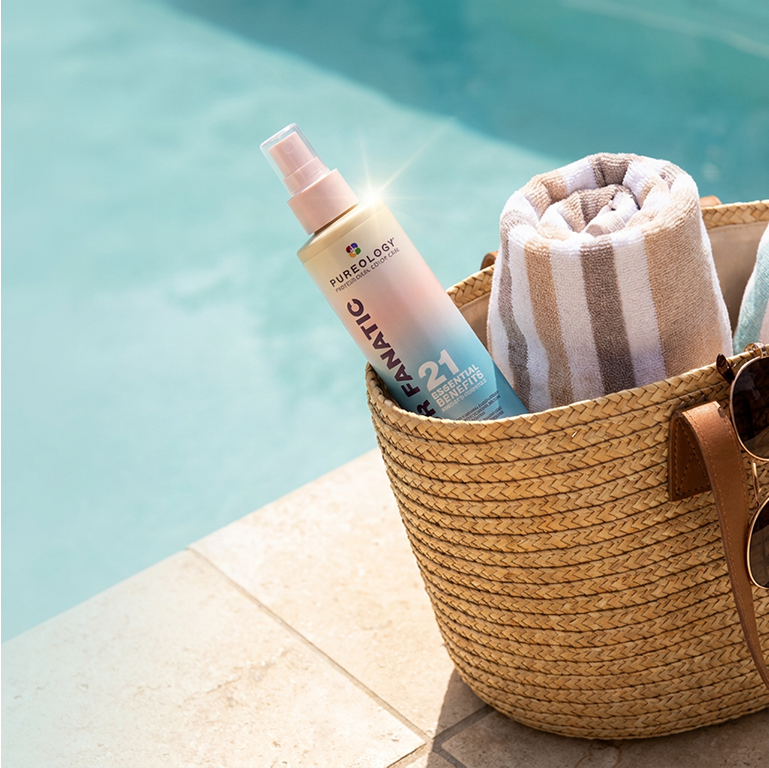
Pureology Color Fanatic Multi-Tasking Leave-In Spray is a lightweight, color-safe mist that helps detangle, add moisture, and improve manageability in one step—while supporting the look of color vibrancy. It isn’t a dedicated UV protectant, but its conditioning care can help hair feel less dry and look smoother after time in the sun, saltwater, or chlorinated pools. With 21 benefits in one lightweight spray, it’s an easy way to simplify both prep and post-sun care.
For Weakened-Feeling Hair After Sun Exposure:
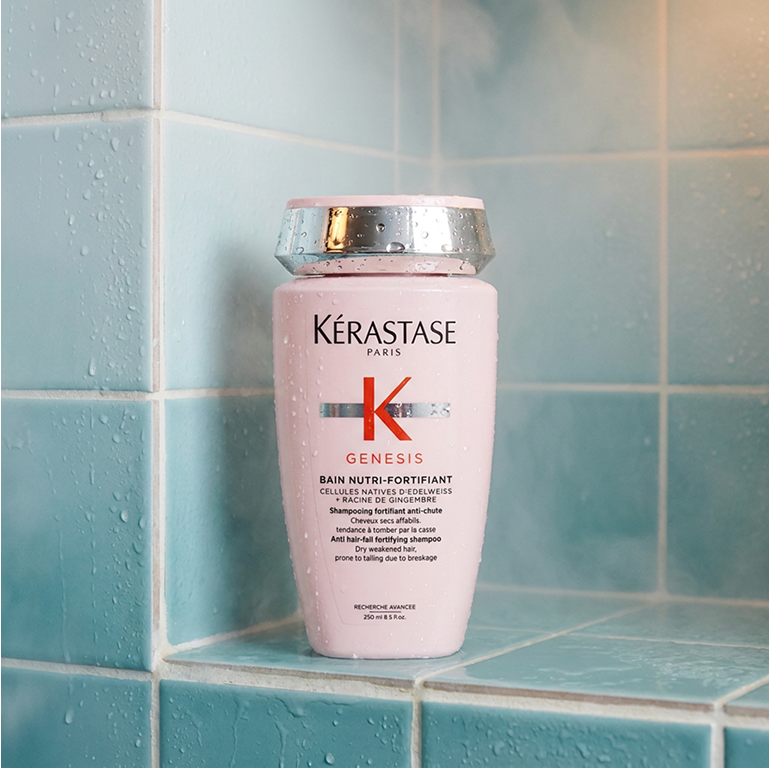
Kérastase Genesis Bain Nutri-Fortifiant Shampoo fits the “replenish” step when hair feels weakened, dry, or more prone to breakage after time in the sun, saltwater, or chlorinated pools. It can also help strengthen hair after excessive brushing or heat styling.
This fortifying, nourishing cleanse for normal-to-dry, weakened hair helps remove residue while supporting softer, smoother, more manageable strands. It helps reinforce the hair fiber to reduce breakage-related hair fall and boost nourishment—so hair feels stronger and looks healthier with continued use. Keep in mind: It doesn’t reverse UV damage; rather, it helps replenish moisture and fortify weakened-feeling hair post-exposure.
For After-Sun Moisture:
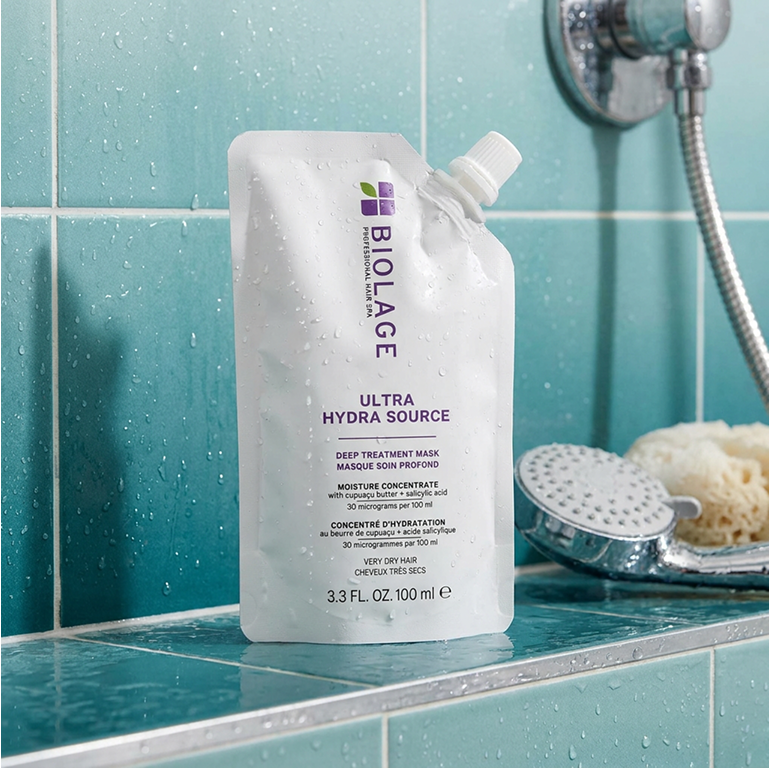
Biolage Professional Ultra Hydra Source Deep Treatment Mask also helps replenish hair that feels dry, rough, or depleted after sun exposure. It’s a moisture-focused option that promotes softness and manageability after beach days, pool days, or repeated outdoor exposure. White it can help support the look and feel of healthier, more hydrated hair, remember that it doesn’t reverse structural UV damage.
Your Hair Sun-Protection Questions, Answered
Does chlorine or saltwater make sun damage worse?
Yes, they can. Both salt and chlorine can be very drying on the hair. When combined with sun exposure, the drying and damaging effects are amplified. It's a good practice to rinse your hair with fresh water immediately after swimming in a pool or the ocean.
How do you protect color-treated hair from sun damage?
Color-treated hair needs both physical and product-based protection because UV rays can speed up fading and make color look dull or brassy. Wear a hat or scarf during prolonged sun exposure, apply a leave-in product with UV protection before going outside, and rinse hair after swimming. After sun exposure, follow with a moisturizing mask or deep conditioner to help restore softness and keep color-treated hair looking healthy.
Can sun-damaged hair be repaired?
Sun-damaged hair can often look and feel better with the right routine, but structural damage to the hair fiber cannot be truly reversed. Frame repair as improving softness, shine, manageability, and the appearance of dryness or roughness. Recommend trims for split ends, hydrating masks, strengthening care when hair feels brittle, and less heat styling while hair recovers.
How often should you reapply hair UV protection?
Reapply a UV-protective hair mist, spray, or leave-in after swimming, sweating, brushing, toweling off, or spending several hours outdoors. The goal is to keep the protective layer refreshed, especially on the mid-lengths, ends, part line, and any areas that get the most direct sun exposure.
How to Keep Hair Protected from Sun Damage All Year
Protecting your hair from sun damage comes down to a repeatable routine: block direct UV exposure, coat strands with lightweight protection, and repair the look and feel of hair after sun, salt, or chlorine. Used consistently, those steps can help keep hair looking vibrant, softer, and more manageable all season.
Product selections are made using editorial research and brand knowledge; personal use or testimonials are noted where applicable.


