


Key Takeaways
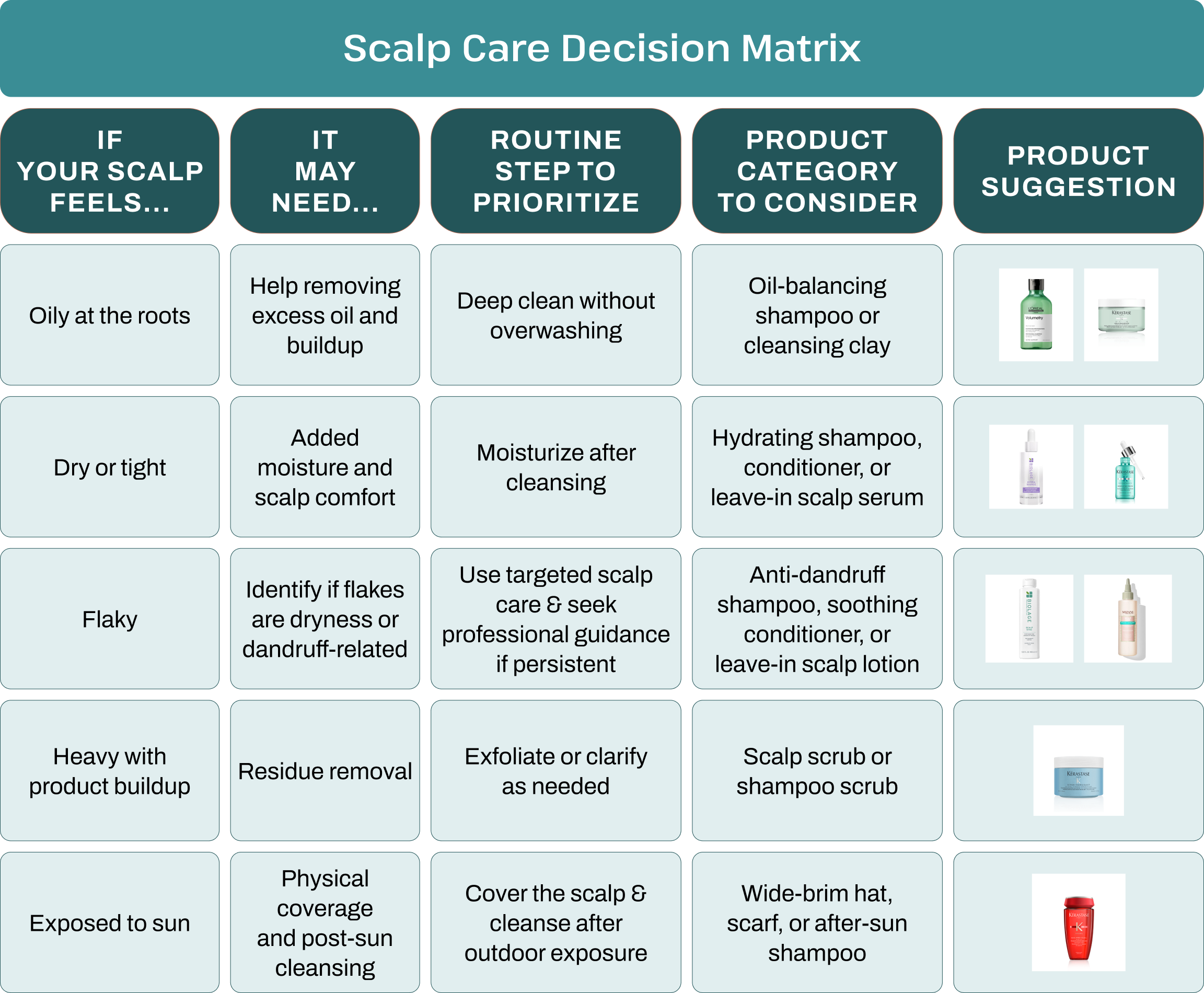
Match your routine to your main concern: oiliness, dryness, flakes, buildup, tight styles, or sun exposure.
- For oily roots: L’Oréal Professionnel Serie Expert Volumetry Anti-Gravity Shampoo or Kérastase Specifique Argile Equilibrante Cleansing Clay.
- For dryness: Biolage Professional Hydra Source Shampoo + Conditioner Duo.
- For flakes: Biolage Professional Scalp Sync Anti-Dandruff Shampoo and Conditioner; see a dermatologist if symptoms persist.
- For scalp comfort: Mizani Scalp Care Calming Lotion is a leave-in option for on-the-go comfort.
- For buildup: Kérastase Scrub Energisant Deep Cleaning Fusio Dose Scrub or Biolage Professional All-In-One Shampoo Scrub With Oat.
- For sun exposure: Use physical coverage first; Kérastase Soleil Nourishing After Sun Shampoo helps remove salt, chlorine, and sand residue.
Why Scalp Care Matters for Healthy-Looking Hair
Your scalp can strongly influence how your hair looks and feels. While overall hair care can help support hair that looks and feels cared for, scalp care can be a helpful part of a broader hair-care routine. If your scalp could use extra attention, your hair may look or feel different than usual. Along with your regular hair care, consider adding scalp-care products or targeted routine steps based on your main concern.
How to Tell What Your Scalp Needs
If you’re noticing itchiness, flakes, redness, irritation, excess oil, or product buildup, these may be signs your scalp could use extra attention. Before creating a scalp-care routine, it can be helpful to identify the main concern you want to address.
When in doubt, consult your stylist or a dermatologist. They can help guide you, especially when it comes to differentiating between common concerns (example: dry scalp vs. dandruff) and recommend next steps based on your scalp and hair needs.
How to Build a Scalp Care Routine
There is no one-size-fits-all scalp routine, so the right approach may depend on your scalp concern, hair type, and styling habits. Read on for scalp-care steps to consider—including exfoliating for visible buildup, shampoos for an oily scalp, choosing formulas for oily roots, and using physical coverage during sun exposure.
Scalp Care Tips by Concern
Oily Roots: Give Your Scalp a Deep Clean
If oily roots are your main concern, start with a cleansing formula designed for oily hair or buildup. It even helps boost volume if greasy roots weigh your mane down.
- Try: L’Oréal Professionnel Serie Expert Volumetry Anti-Gravity Shampoo (with salicylic acid).
- For combination scalps or extra deep clean, use Kérastase Specifique Argile Equilibrante Cleansing Clay weekly as directed.
Dryness: Add Moisture Back Into Your Routine
A dry scalp describes a hydration issue, indicating that your skin lacks moisture. Hydrating shampoos and conditioners made with ingredients like aloe or glycerin can help hair and scalp feel more moisturized.
- Try: Biolage Professional Hydra Source Shampoo + Conditioner Duo (aloe-inspired).
- For extra hydration, use a scalp-aimed leave-in serum like Kérastase Resistance Sérum Extentioniste Scalp & Hair Serum as per directions.
For Flakes: Know the Difference Between Dry Scalp and Dandruff
Keep flaking to a minimum by incorporating products made especially for this condition into your hair care routine to help restore your scalp to a healthier, flakeless state. Visible flakes can result from dryness or dandruff, but these are not the same. Dandruff may appear as larger, more visible flakes, while dryness often looks fine and powdery. Because flakes can have different causes, consider checking in with a dermatologist if flaking, itching, redness, or irritation persists.
- Try: Biolage Professional Scalp Sync Anti-Dandruff Shampoo (formulated with pyrithione zinc and mint to create a refreshed feeling) followed by Scalp Sync Conditioner.
- For on-the-go comfort: Mizani Scalp Care Calming Lotion.
For Product Residue: Clean Your Hair Tools Regularly
Wondering how to manage visible scalp buildup? Exfoliation may be a helpful step. A scalp exfoliator can be a helpful addition to some scalp-care routines.
- Try: Kérastase Scrub Energisant Deep Cleaning Fusio Dose Scrub or Biolage Professional All-In-One Shampoo Scrub With Oat.
Tight Styles, Tangles & More
It can be tempting to throw hair into a claw clip without even thinking of picking up our hair brush first. As tempting as this is, it may do more harm than good, even if it saves precious time in the morning. Skimping out on brushing your hair can create tangles that make it that much harder to remove when the time comes—and weeding through the accumulated knots can lead to shedding, breakage, or damage.
- Brushing: Skipping brushing before putting hair up can make tangles more likely for some hair types. Choose a brush that’s right for your hair and detangle before updos. A comprehensive hair brushing guide can outline answers to common questions, including how often to brush hair and with what type of bristles.
- Clean Hair Tools: For combs and brushes, clear loose hair regularly, as trapped hair can collect product residue and oil.
- For more detail, complete guides are available on how to clean hair brushes and combs the right way and how to clean your curling iron based on guidance from hair care professionals.
- Gentle scalp massage: An at-home scalp massage can be a relaxing part of a routine and is intended to leave the scalp feeling refreshed.
Protect Your Scalp From Sun Exposure
Your scalp and hair can be exposed to the sun during daily activities, but scalps are often ignored when applying daily SPF products. If you plan to be in the sun for long periods, consider sitting under an umbrella or wearing a physical head covering.
- Consider a lightweight hat with tighter stitching and a wide brim for more coverage.
- Post-sun, use Kérastase Soleil Nourishing After Sun Shampoo to gently remove chlorine, salt, and sand residue while helping hair feel hydrated.
- Styling products for extra support: Try Pureology Style + Protect Weightless Volume Mousse For Color-Treated Hair (weightless volume) and Shu Uemura Art of Hair Essence Absolue Nourishing Protective Hair Oil for shine and moisture.
Final Tips
With these scalp-care tips and product options, you can build a routine that feels right for your scalp and hair needs. If symptoms such as flaking, redness, or irritation persist, check with a professional for personalized guidance.
For more advice, explore the in-depth scalp and hair care guides on Hair.com and talk to your stylist or dermatologist.
This article is for informational purposes only and is not a substitute for professional medical advice, diagnosis, or treatment. Always seek the advice of your physician or other qualified health provider with any questions you may have regarding a medical condition.


