


How Does Hair Toner Help Neutralize Brassiness?
KEY INSIGHTS / TL;DR
- Summary: Hair toner is a color-correcting product specially designed to neutralize unwanted warmth in color-treated or lightened hair, keeping your color cool and fresh.
- Key Takeaways:
- Color-treated hair often develops brassy yellow, orange, or red undertones as it fades.
- Toner refines your final shade after a coloring service, or acts as an easy at-home fix.
- At-home toning products (like purple or green formulas) help extend the life of your salon color and keep unwanted brassiness in check.
A hair toner is a color-depositing product that adjusts the visible tone of lightened or color-treated hair—helping to neutralize brassiness and refine the finished shade. Used either as a post-salon service or as part of your at-home routine, toners in the form of shampoos, conditioners, glosses, or masks are a popular option for keeping color vibrant and true-to-tone. Here’s a breakdown of how hair toners work for all shades and an actionable guide on how to use toning shampoo and conditioner effectively for vibrant, lasting results.
While many people associate hair toner only with maintaining blonde shades, these formulas can be beneficial for anyone—brunette, red, silver, or gray—wanting to manage brass and preserve their ideal hue between color appointments. The format you choose, and your starting hair shade, will determine whether you need a salon-grade toner or an easy at-home solution.
Ready to learn more? Here’s what you need to know about how hair toners work and how to make them a seamless part of your haircare regimen.
What Does a Hair Toner Do?
Hair toner uses color theory and targeted pigments to visually balance unwanted warmth in hair. Whether you need to neutralize orange tones after lightening your hair or tackle persistent brassiness, toning products deposit color-correcting pigments onto the hair shaft—shifting your visible color, not your natural base.
- Violet pigments: Neutralize yellow undertones
- Blue pigments: Neutralize orange undertones
- Green pigments: Soften red undertones
- Blue-violet pigments: Ideal for yellow-orange
Identify the Unwanted Tone First:
- For yellow? Go purple.
- For orange? Choose blue.
- For red? Use green.
This is why purple shampoo, as a toner, is formulated for yellow brass, not orange. Using a toner not matched to the specific undertone may have a limited effect.
When applied, toner deposits pigments onto the hair shaft and cuticle, shifting the visible color without permanently altering your natural base. Results depend on your hair’s porosity, color history, and previous chemical services. The outcome: a more balanced, nuanced shade—whether you want icy platinum, ash brunette, or less orange showing in your red.
Who Should Use a Hair Toner?
Toner is for anyone with color-treated hair developing visible warmth, looking dull, or losing its intended tone.
For Color-Treated Blondes
Signs you need a toner:
- Yellow or golden tones become more noticeable
- Color looks dull, muted, or faded
- Loss of brightness post-bleaching/highlighting
For Color-Treated Brunettes and Redheads
Toner is relevant when:
- Orange brassiness becomes visible after lightening
- Red-orange undertones appear as color fades
- Your current shade doesn't match your goal
Professional Hair Toners vs. At-Home Toning Products
When a salon toner is used: A professional toner is typically applied by a colorist immediately after bleaching, highlighting, or another lightening service to perfect the final hair shade. It may also be recommended as a separate service if your color has changed over time, or if you need more precise tone correction than at-home options can provide.
How professional formulas differ: Salon toners are customized to your hair’s starting color, porosity, previous color services, and your desired result. These formulas are often mixed with a low-volume developer, which allows for deeper, longer-lasting color correction. By comparison, at-home toning shampoos and masks—such as purple, blue, or green-tinted versions—deposit smaller amounts of pigment for more subtle, temporary effects.
Maintenance versus correction: At-home toning products are ideal for maintaining color between appointments and keeping brassiness in check. However, they aren’t designed for serious color correction. Deeper warmth, uneven tone, or significant shifts in color are best corrected at the salon by a professional.
Hair Toner vs. Gloss, Glaze, Toning Shampoo, and Demi-Permanent Color: What’s the Difference?
Hair toner, gloss, glaze, toning shampoo, toning masks, and semi-permanent color acts as a stain can all affect tone, but they are not interchangeable. The biggest differences are whether they use developer, how much pigment they deposit, how long the result lasts, and whether they are designed for correction or maintenance.
| Product Type | What It Does | Requires Developer? | Result Strength | How Long It Generally Lasts | Correction or Maintenance | At Home or Salon |
|---|---|---|---|---|---|---|
| Hair toner | Neutralizes yellow/orange/red after lightening or coloring. | Often; many professional toners use a low-volume developer, although formulas vary. | Moderate to strong. | Usually for a few weeks; results vary by formula, hair porosity, and wash frequency. | Correction/Refresh. | Salon, typically: especially when used after bleaching/lightening or for precise tone correcting |
| Hair gloss | Adds shine, can refresh/adjust overall tone. | Sometimes; professional demi-permanent glosses commonly use a low-volume developer, while some at-home glosses do not. | Mild to moderate. | Commonly several weeks, depending on the formula. | Correction/Maintenance. | Both: professional glosses are common in salons, while at-home glosses are typically more subtle and maintenance-focused |
| Hair glaze | Boosts shine, sheer tint, does not lift or deeply impact color. | Usually no. | Subtle. | Generally, oneto two weeks. | Primarily maintenance. | At home, typically: a low-commitment shine/tint treatment, though some salons may offer glaze-style services |
| Purple shampoo | Deposits pigment to cancel brass during cleansing. | No. | Subtle and gradual. | Temporary; the effect is refreshed with continued use and fades with washing. | Maintenance. | At home: used between salon visits to maintain blonde, silver, or gray tones |
| Blue shampoo | Deposits pigment to cancel brass during cleansing. | No. | Subtle and gradual. | Temporary; the effect is refreshed with continued use and fades with washing. | Maintenance. | At home: used between salon visits to help manage orange brassiness, often for brunettes |
| Toning mask | Deep conditions + concentrated pigment for specific brass. | Usually no. | Mild to moderate, depending on pigment concentration and processing time. | Temporary; often lasts several washes. | Maintenance/Correction. | At home, typically: used for targeted maintenance or mild correction |
| Demi-permanent color | Deposit-only tone refresh or adjust, doesn’t lighten hair. | Usually yes; commonly paired with a low-volume developer. | Moderate to strong. | Typically several weeks, depending on the formula. | Correction/Refresh. | Salon, typically: because it often uses developer and involves more controlled color adjustment |
At-Home Toning Products to Maintain Your Color
Between salon visits, at-home toning shampoos, conditioners, and masks help manage brassiness and keep your shade fresh. The key is matching your product to your undertones.
For Blonde, Silver, and Gray Hair:
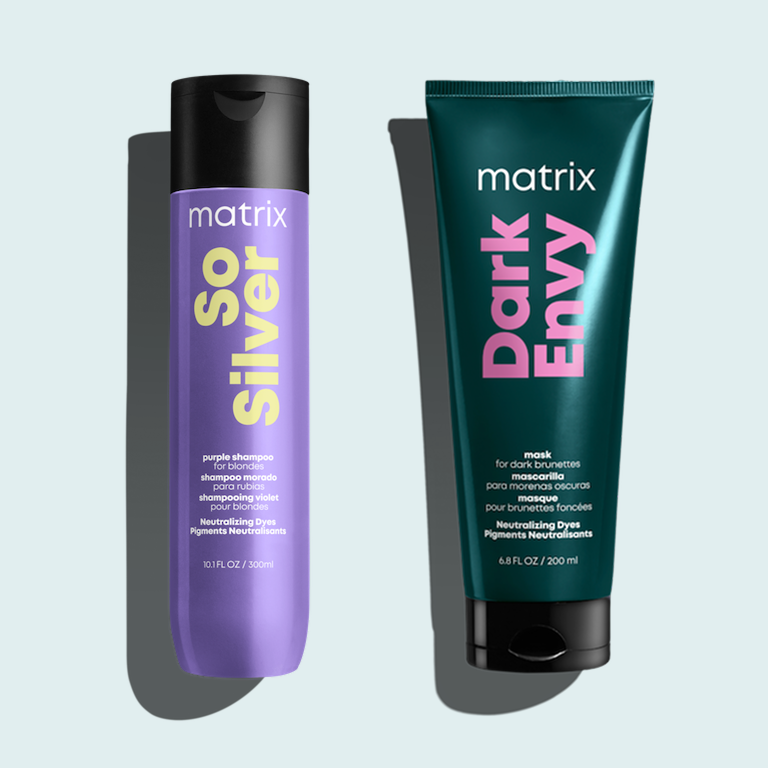
Matrix Total Results So Silver Purple Shampoo and Conditioner
- Violet pigments neutralize yellow tones for cool, bright blonde or gray.
- How to use hair toner: Wear gloves, apply shampoo to wet hair, lather, then rinse. For extra toning, repeat and leave 3-5 min. Follow with conditioner for 1-2 min, then rinse.
- Ideal for: Lightened, platinum, gray, and silver hair with yellow undertones.
For Neutralizing Red Tones in Dark Hair:
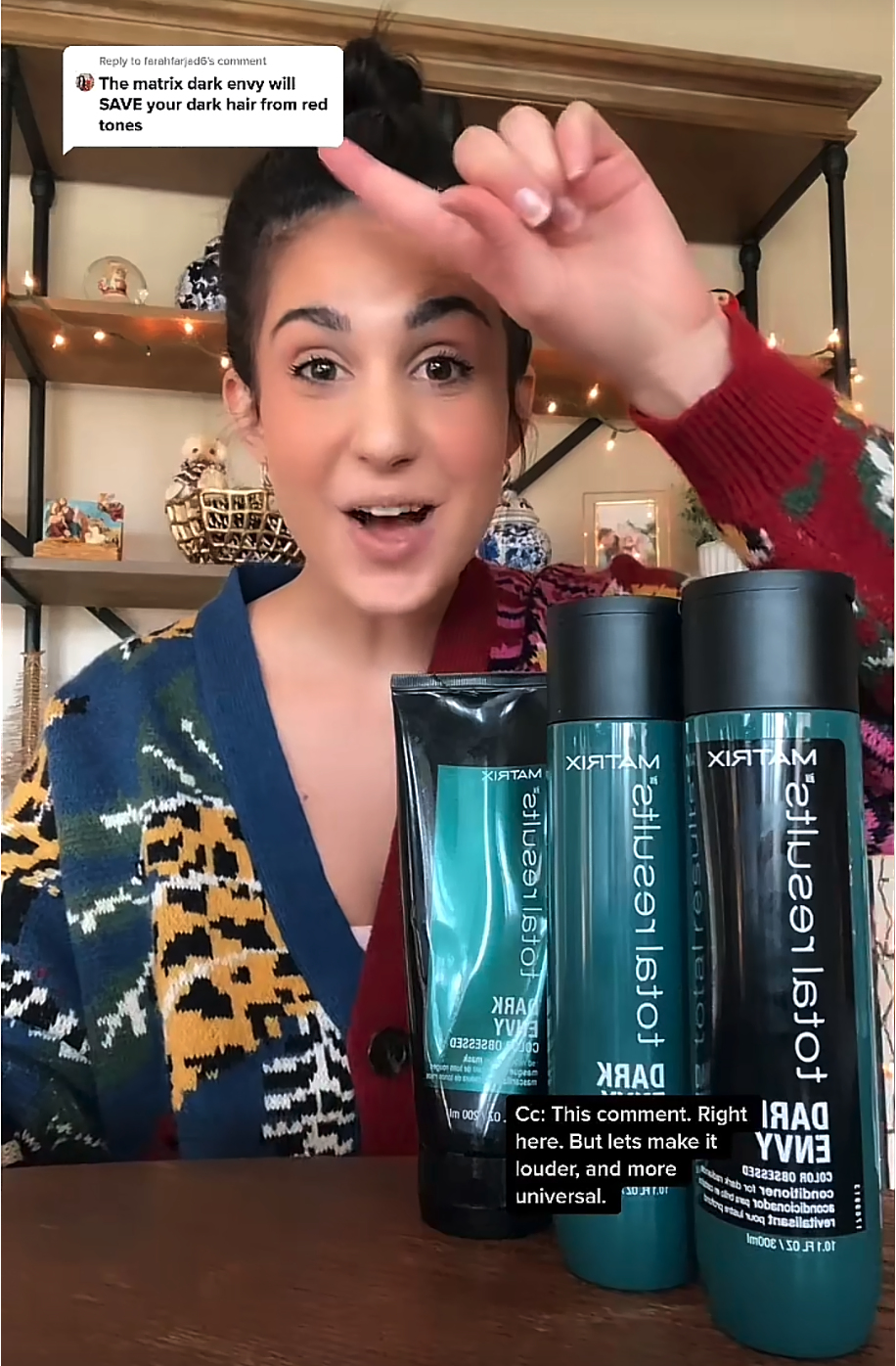
Matrix Total Results Dark Envy Red Neutralization Toning Hair Mask
- Green pigments counteract unwanted redness in dark brunette/black hair.
- After shampooing, apply to wet hair (avoid scalp), leave up to 5 minutes, rinse thoroughly. Use weekly.
- Ideal for: Dark brown/black (colored or virgin) hair needing red tone correction.
At-home hair toner tip:
Use these color-correcting formulas once or twice a week as needed. Overuse or uneven application could result in over-toned hair—so always follow the instructions and start slow.
Over-Toning and Uneven Results
Applying too much toner, or leaving it on for too long, can lead to unexpected color results—especially on porous or heavily lightened areas. Common signs of over-toning include:
- Purple or blue hues: Excess cool pigment, often in very light or porous sections.
- Gray or overly ashy appearance: The formula was too cool for your starting shade or processed for too long.
- Muddy or overly dark results: Too much pigment or a toner that’s too deep for your hair.
- Patchy or uneven color: Differences in hair porosity—such as on the ends or previously lightened areas—can cause some sections to absorb toner faster than others.
To avoid these issues, always strand-test the product on a small, hidden section before full application. Follow the specific product instructions, monitor processing time closely, and never exceed recommended timing. If you experience major unevenness or your hair feels compromised, consult a professional colorist before making further corrections.
FAQ - Hair Toner Questions Answered
Still wondering how to use hair toner or what to expect? Here, we tackle your most common questions—covering timing, safety, product differences, and whether toner can be used on non-colored hair.
How long do you leave toner on your hair?
Depending on the product and hair condition, anywhere from 5–20 minutes (toning shampoos and masks: just 3–5). Always follow the label—increased time can lead to over-toning.
Is toner damaging to hair?
Generally, pigment-depositing shampoos/masks aren’t damaging. Salon toners with developer require more care, especially on fragile or heavily processed hair. When unsure, consult your stylist.
What is the difference between hair gloss and toner?
Toner is designed to correct unwanted tone (yellow, orange, red). Hair gloss focuses on shine, subtle refresh, or tonal shifts. Some glosses do contain pigment and can serve both purposes—always check the formula.
Can you use toner on natural, uncolored hair?
Most effective on pre-lightened hair, but some toning products will add a sheer tint or shine on virgin hair. Toner won’t lighten your natural color.
How often should I use an at-home hair toner?
1-2 times per week, as needed for brassiness. Overuse may result in dullness or unwanted hues.
Choosing and Maintaining the Right Hair Toner
A hair toner is a key tool for maintaining balanced, beautiful color and combating unwanted brassiness. Salon applications are perfect for correcting intense shifts, while at-home toning shampoos, conditioners, and masks help keep color looking salon-fresh.
Call to Action:
Explore more expert-approved ways to protect, refresh, and extend the life of your color-treated hair by browsing the latest solutions on Hair.com.
Product selections are made using editorial research and brand knowledge; personal use or testimonials are noted where applicable.


